

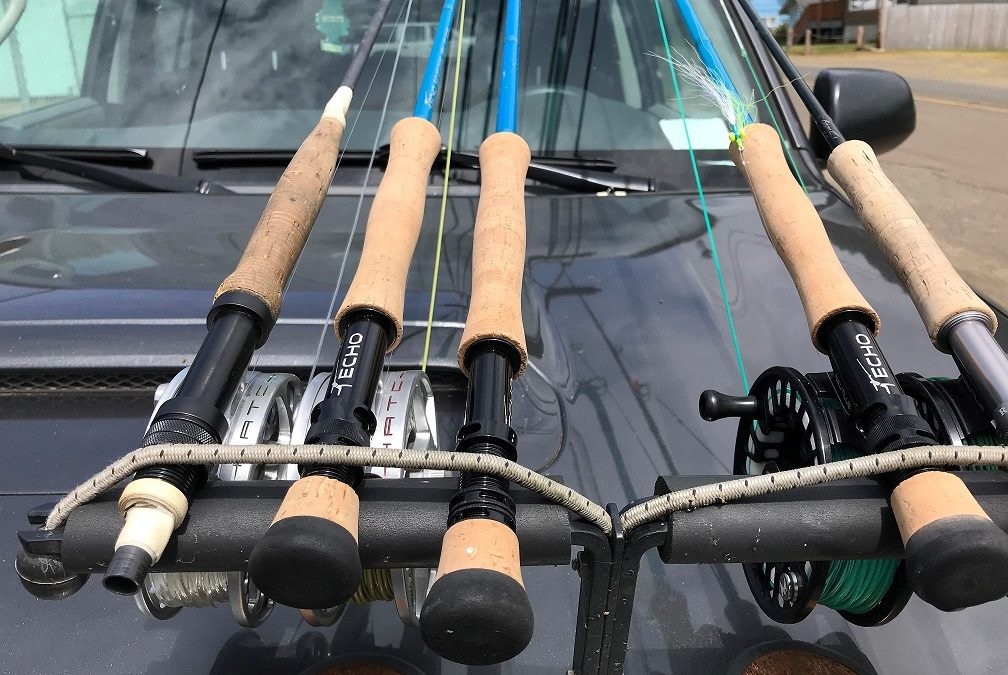
Photo by Jay Nicholas
Like some, I initially thought fiberglass rods would feel slow and cumbersome

Henry Clement, Rehoboth Beach, Delaware, August 2023. Photo by Capt. Andrew Derr.
By Henry Clement
My first impressions at fly-fishing shows seemed to confirm this, as several glass rods cast sluggishly. Others not so. However, that perception of too slow changed dramatically after I purchased Echo’s Bad Ass Glass (BAG) and put it to the test—first with a saltwater snook and then with a freshwater largemouth bass.
The BAG is anything but whippy
It proved invaluable when a 20-pound tarpon, on the retrieve, suddenly bolted for the gunwale [as usual]. Thanks to the BAG and a 6-pound drag setting on the Nautilus reel, the rod absorbed the explosive run, keeping me in control—not just relying on luck. While the BAG is slower and a bit heavier than modern graphite rods, it feels closer to a medium-action rod than a typical slow glass rod. The extra weight is minor and shouldn’t trouble most anglers.
Bamboo, or IM8 graphite
To get the best performance from any glass, bamboo, or IM8 graphite rod, simply slow down your casting stroke. Once you adapt your rhythm, the rod becomes a pleasure to cast—you feel every nuance of the cast. The BAG, in particular, can carry impressive amounts of line with a smooth, relaxed stroke, letting the rod do the work. It won’t out-distance the fastest graphite rods, but it gets surprisingly close and easily covers the distances where most fish are found.
Surprise, surprise
A pleasant surprise is the BAG’s ability to turn over wet, bushy flies. Adding an extended grip (fighting butt) makes it an excellent option for spey casting—roll casts, dynamic casts, and touch-and-go techniques come easily. It’s like a BOGO deal [Buy One, Get One]: you get both conventional and spey casting from a single rod, with greater distance and accuracy.
One technique adjustment that helps with the BAG is using a slightly higher stop on the forward cast during a haul, which tightens your loops. Since fiberglass bends more than graphite, that extra lift at the end of the stroke makes a meaningful difference.
Some believe fiberglass feels too heavy
While it’s not as light as high-end graphite, the weight difference is negligible unless you’re casting at extreme distances. For most situations—shorter, rhythmic casts up to about 60 feet—the rod is comfortable and not fatiguing over time.
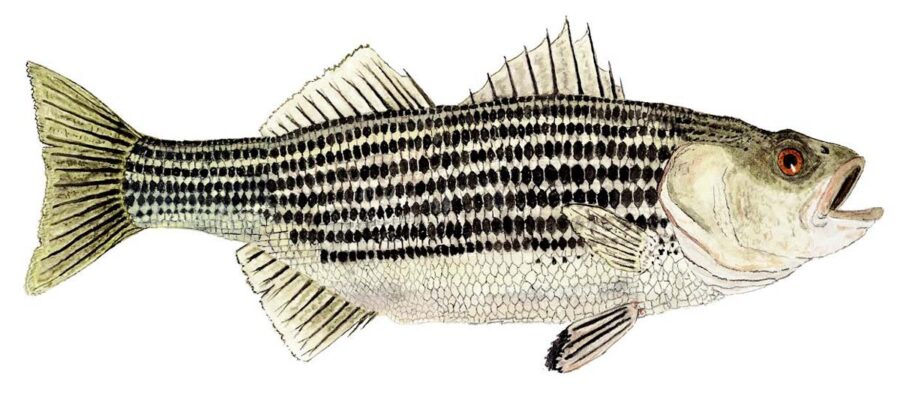
Thom Glace’s award-winning watercolor of a commissioned striper is one of the best illustrations of Morone saxatilis.
Many rod manufacturers now offer quality glass options. Try a few before you buy; parking an unused rod in the closet is a regretful mistake
A note on switch rods: Modern switch rods longer than 9’9” are far more user-friendly than in the past. However, once you get to 11- or 12-feet, they become unwieldy for overhead casting and function more like short spey rods—best suited for guides or experienced anglers. These longer rods are unpopular for skiff fishing or wading the flats, and are best reserved for big Western rivers.
For more information
Visit the Fiberglass Manifesto website. It’s well-managed and free from misinformation.
Also, watch this Sameo video for casting techniques worth adopting
Sponsored