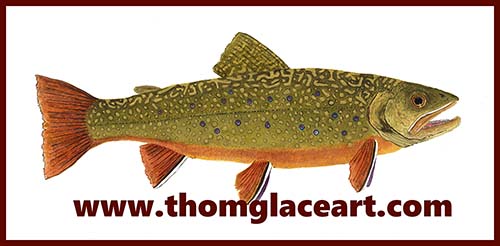

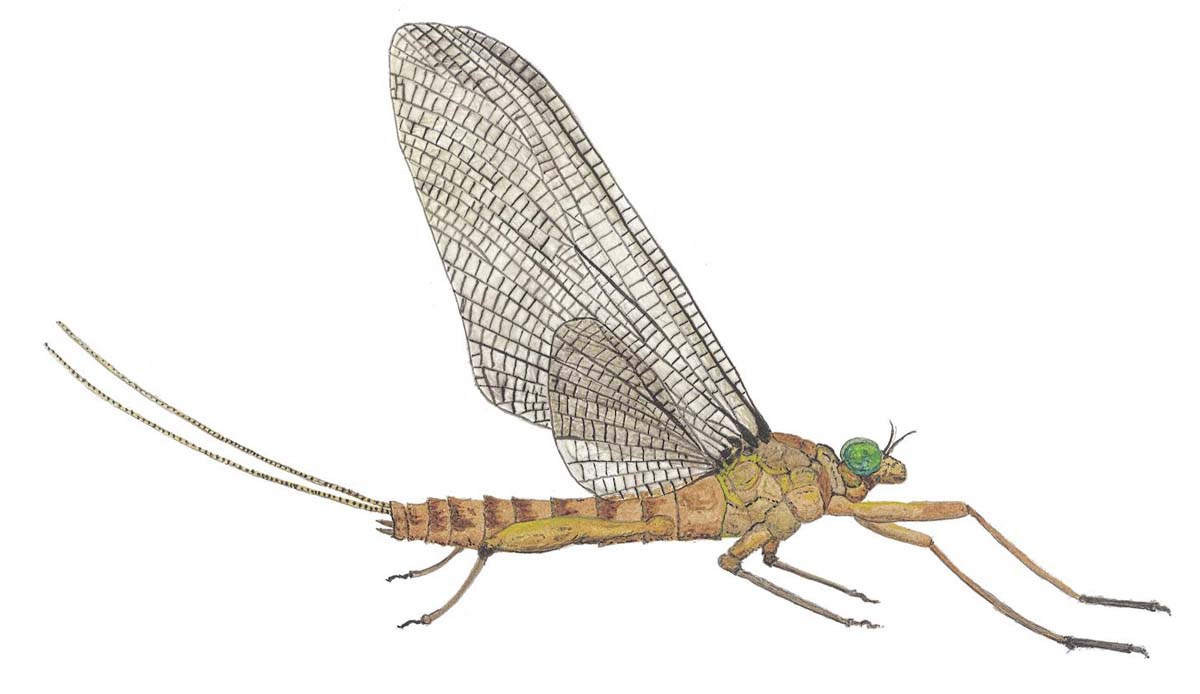
Male March Brown Dun Mayfly Study provided courtesy of Thom Glace.
Knowing what trout mostly eat—about 90% of the time

Henry Clement, Rehoboth Beach, Delaware, August 2023. Photo by Captain Andrew Derr.
By Henry Clement
Academically knowing what trout eat mostly means little if you don’t know how to cast, fish a fly, or choose when and where to fish. Mastering these practical skills is essential if you want fly fishing and catching trout to be more than just a possibility. If you’re a novice, dedicating two and a half to three full years to your home waters will give you a solid foundation.
Library knowledge summarized
So, what’s the summary of “library knowledge” about trout diets? Worldwide, trout are carnivores; their diet is not plant-based. Trout rely mostly on animal protein, focusing on insects, aquatic larvae, crustaceans, small fish, and other tiny aquatic creatures. In hatcheries, farmed trout are fed high-protein pellets with fats, vitamins, and minerals to encourage rapid growth. In the wild, a trout’s diet varies by species, size, season, and habitat. Larger trout, especially brown trout, favor larger prey as they grow.
There is science
Scientific studies show that a small group of aquatic insects—mayflies (Ephemeroptera), stoneflies (Plecoptera), caddisflies (Trichoptera), and midges (Diptera)—make up about 90% of a trout’s diet worldwide, across all sizes and waters. Aquatic larvae are especially vulnerable when dislodged from the stream bed and drifting helplessly in the current, making them easy targets. Stocked trout that survive in the wild also shift to these natural food sources over time.
Other important prey include:
- Crustaceans: Scuds and freshwater shrimp, common in slower waters and lakes, are heavily consumed. Larger trout also target crayfish, which are high in protein.
- Baitfish and fry: Small minnows, sculpins, and other forage fish are targeted by larger trout.
- Terrestrial insects: Ants, grasshoppers, damselflies, and other land-based bugs that fall into the water—especially in summer or on windy days—are quickly eaten by opportunistic trout.
Where and when do trout eat these insects?
Trout feed most often on insects at the emerger stage—just below or at the water’s surface film. At this stage, insects are trapped and vulnerable as they attempt to shed their exoskeleton and emerge as adults. Trout feed aggressively on emergers, making this a prime opportunity for anglers to target them with subsurface flies.
- Nymphs (larval stage, near or just above the riverbed): Trout eat nymphs year-round, making nymphing a consistently productive technique.
- Duns (adult stage, on top of the water): Trout eat duns less frequently, since duns can quickly escape by flying away, giving trout a narrow feeding window.
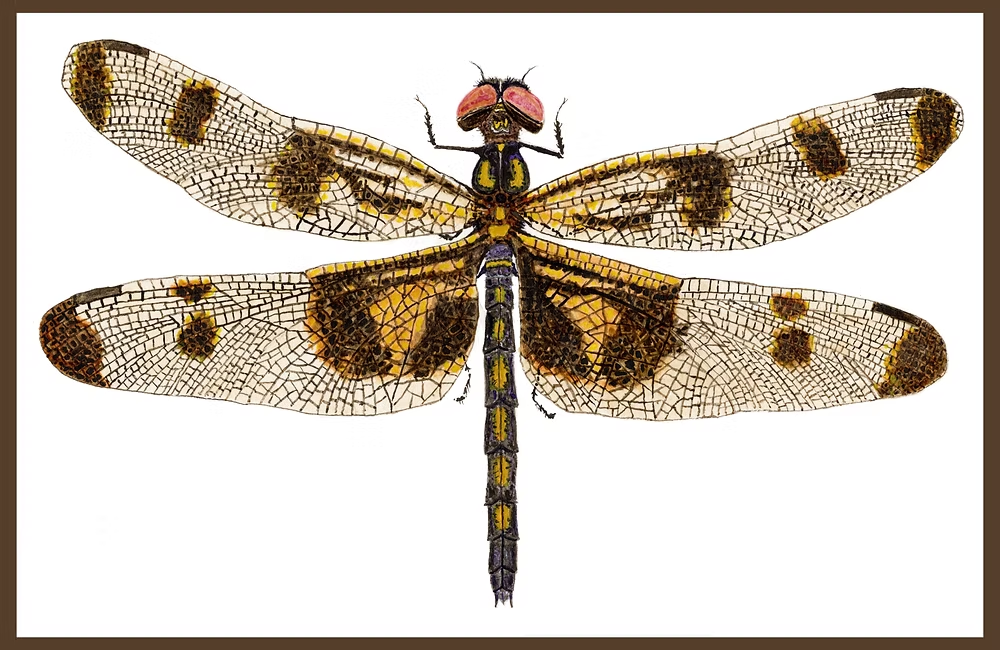
NOTE: Featured Image by Thom Glace Banded Penant Dragonfly
Sources:
Captain Andrew Derr, Georgia Wild Trout, Field and Stream, Fly Fisherman, Steve Hudson, Ruben Martin, Leandro Longobardi, Orvis [see video]
Sponsored