
AI is search engine squared

Henry Clement, Rehoboth Beach, Delaware, August 2023. Photo by Captain Andrew Derr.
By Henry Clement
Well, here’s reality
AI is just better at searching now than old search engines, and it’s rocket-fast. And yes — you still get serial-bombed with sources. My take: not all AI search tools are created equal.
For example
If you know how to work one, and you already know a lot about the subject, you’re instantly at an advantage. You’ll sniff out the cow dung instantly.
Beware
If you’re searching for something unfamiliar, ask very specific questions. Like: find fly fishing only fly shops in the Atlanta area within walking distance or a short taxi ride from my hotel. With that specific question, you’ll find Orvis and Fish Hawk. Get local comments about the fly shops. To use AI to your advantage, be boringly specific. Don’t worry about grammar in your ask, but spell correctly. If you are staying at the Park Hotel and use the name Peak Motel, AI could send you to Hong Kong.
Always ask locals for comments on restaurant ratings within walking distance of your hotel, and ask whether the area is safe. If it is an ethnic restaurant, ask for those comments in that language (then opt for translate).
The key is making very specific requests; that’s how I use AI confidently.
Dedicated AI & Mobile Apps
The proliferation of AI-generated sites is hard to count. The specifics range from how to replace a knee to space-mining chemistry, anything knowable in mathematics or science, and dark sites for bomb-making. It’s overwhelmingly good and disturbing at the same time.
Are there specific site apps for fly fishing?
Yes, and here is what they say about themselves. Many other sites also mention fly fishing, as noted above.
FishTech: A dedicated mobile AI fly fishing guide and app featuring an interactive 24/7 AI fishing expert (via voice or text), 400+ fly-tying recipes with material lists, real-time river conditions, and a digital fly box to track inventory. [1, 2]
IdentaFly: An app for anglers that uses AI photo recognition to identify aquatic insects on streams and physical flies in your box, plus GPS hatch forecasts and a searchable database of fly patterns. [1, 2]
Source for this text: MOI, AI, plus a quote.
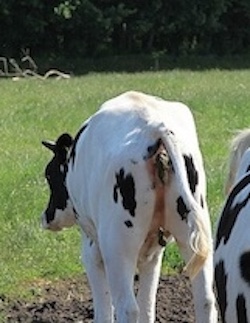
Featured Image: Cow pooping is a common image from Wikipedia
Sponsored