

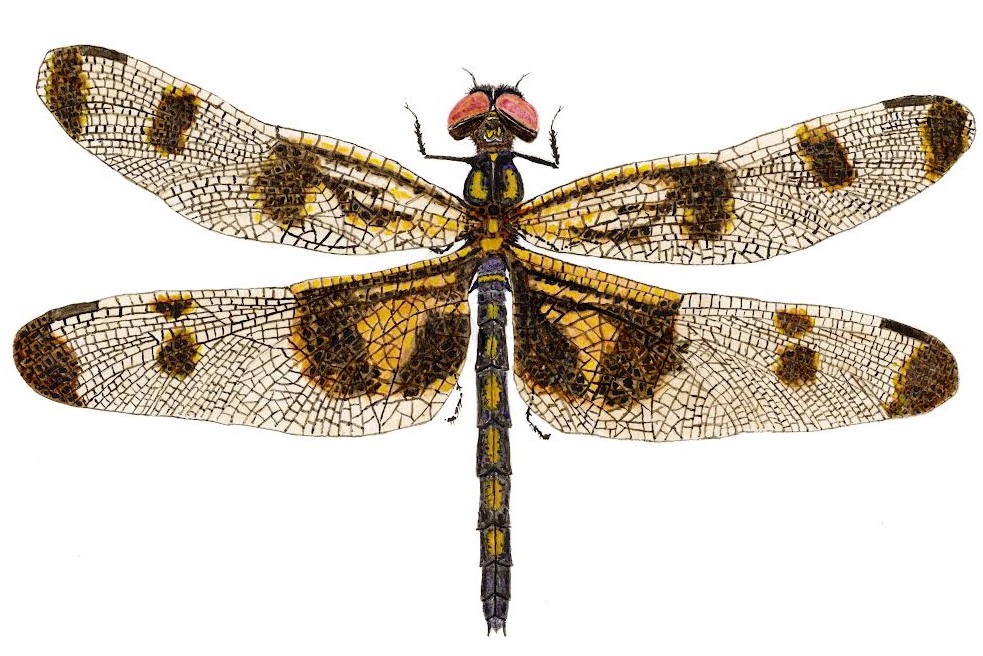
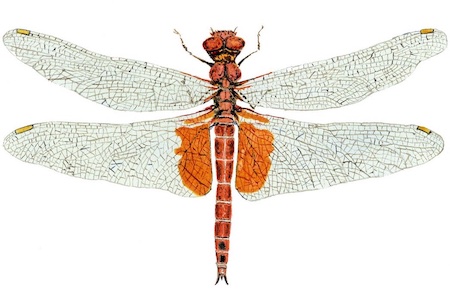
Banded Pennant
Celithemis fasciata

Dragonflies, global citizens with AI systems that AI developers wished they could copy

Thom Glace is demonstrating and signing his art pieces at the TCO Fly Shop in Boiling Springs, Pennsylvania.

By Henry Clement with Thom Glace

Last August, 2024, my friend and I had a walkabout on the Eberle Farmstead acreage with the owner, Angie Roth. Mid-day, encouraged by her, we took a dip on a 93°F day.
The section we chose to jump in was a multi-stream race of aquatic richness with deep pools and a small waterfall paralleled by what looks like a layered slate wall rising at least 200 feet. We waded up to our necks opposite the wall for a camera-lens view, but our height difference kept her farther shoreward.
The sun’s angle, like blinking lights, danced through the flora, revealing an army of dragonflies, hovering, emerging, clinging to rocks and tree branches, drying there, magnificent with their two pairs of wings. It was an intoxicating visage, looking at it eye level, like a scene from a Martin Scorsese movie.

Neither of us had experienced an aquatic life event quite so dramatic
Hundreds and hundreds of larval stage dragonflies emerged and parked all over hanging branches and rocks. We watched them park, dry their wings, and then take flight. Some had an imperfect flight and, in their struggle, made considerable water surface bounces pre-flight, adding themselves along with those yet to emerge, getting feasted on by local browns, rainbows, a few brookies, as well as some spotted bass (we guessed).
They were pounding cripples and picking off emergers long before we got there, and were still at it when we left 20 to 25 minutes later.
NOTE: We ended up not fishing after noticing Angie’s hook-up with a +/- 18-inch rainbow that seemed “off” in its resisting arrest. The water was too warm, and Angie shook it off the undersized tube fly hook. The fly was a plus-or-minus #10, dressed in all black, as Richard Blessing invented the Woolly Bugger, swam as a tube fly a few inches below the surface with a short-shank #6-size hook.
SIDEBAR: The only equivalent was seeing huge brook trout eat acres of emergers in Lake Mistassini, Quebec, Canada, the largest natural Lake in Northern Quebec, 56 years ago.

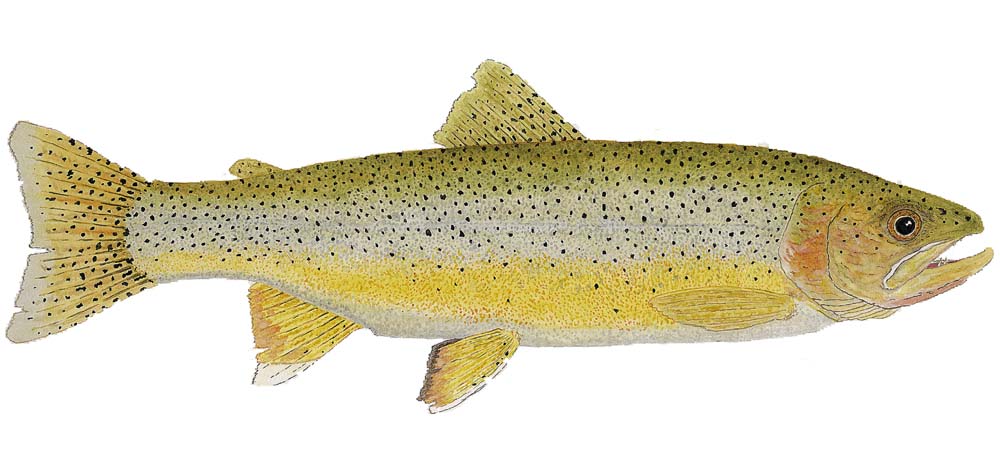
Coastal cutthroat trout fresh from the ocean. A Thom Glace illustration.

A dragonfly story emerges

Angie knew about Thom Glace’s International awards and his knowledge, passion, and art studies of dragonflies. She said, “Dragonflies might be an interesting story for trout fishers.”

I gave Thom Glace a call. There were questions about dragonflies after watching their life cycle unfold up close and personal.
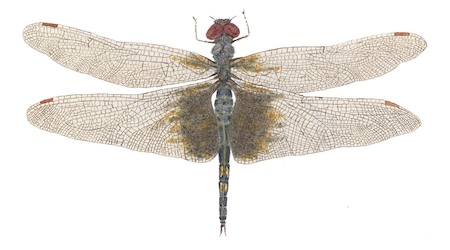
Black Saddlebags
Tramea lacerata

Glace enthusiastically shared his vast knowledge of Dragonflies

Thom said, “Remarkably, one of the most recognizable orders of insect is the Odonata, Dragonflies (suborder Anisolyera) and Damselflies (suborder Zygoptera). He said, “According to multiple sources, there are approximately 5,500 species identified worldwide.” Adding, “Several of the Dragonfly images I gave you are found on your friend’s farmstead in North Georgia. In North America (Canada and the US), the Odonata order comprises over 450 species. Dragonflies are more common than Damselflies, but they share many of the same characteristics and behaviors. They are easily confused by the casual observer.”

Over several weeks, here’s what Thom shared, both written and verbal (paraphrasing)
Dragonflies are aerial predatory insects mostly found near freshwater. They have long, two-part bodies and two pairs of intricately veined transparent wings. The latter is a significant part of their beauty with colored markings.

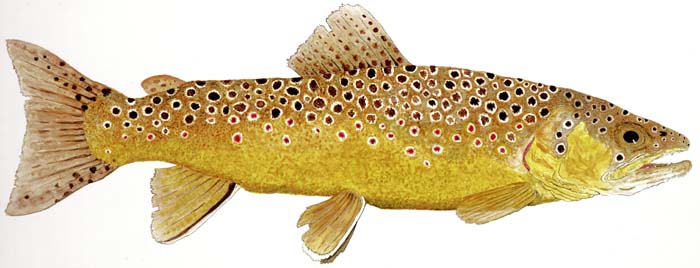
The brown trout, Salmo trutta, imported from Europe in the 1800s, flourished in North American environments. In many instances, it outbred and outfed its native cohabitants, diminishing native fish stocks to the point that extinction occurred or became possible—illustration provided by Thom Glace.

Aerially

Dragonflies are the envy of air forces—agile beyond belief, fast, and can turn on a dime. They can fly in all directions, hover, and reach speeds of about 34-35 mph, making them among the fastest flying insects globally.
As predators, adult dragonflies can catch their prey mid-flight. They have a 95% capture rate—feeding on mosquitoes, flies, and other small insects.
The larvae, or nymph stage, takes place underwater, where they begin their predatory life with a specialized, extendable lower jaw called a “mask” and fang-like pincers to capture aquatic prey such as mosquito larvae, tadpoles, and small fish.
Emergence from the nymph stage most often occurs near vegetation or a solid surface. There, the adult dragonfly dries and hardens its wings before attempting to take flight.
Dragonflies begin as an egg that forms into the larval stage (nymph) that can last up to several years, but their adult stage lasts about five weeks.

Red Saddlebags
Tram loaded

Dragonflies make today’s AI kindergarten tech

Their vision makes driverless AI vehicle technology akin to Polaroid Cameras. Dragonflies have large compound eyes, a very noticeable physical characteristic, that can have as many as 24,000 tiny lenses, and they can fly using each wing independently. No such maneuverability and hovering capability exist in the animal kingdom or in the world of manufactured products.
Dragonflies are sometimes confused with damselflies, but can be distinguished by their wing posture (dragonflies hold wings flat and away from the body when resting, whereas damselflies fold them along the body). Dragonflies have been around for hundreds of millions of years, predating many other animals, and continue to play an essential role in controlling pest insect populations in aquatic and terrestrial ecosystems. — Dragonflies
Thom Glace’s illustrations of dragonflies are unmatched globally, and owning one of his limited prints or an original is still remarkably within reach of any collector or lover of dragonflies’ enchanting beauty.
Contact information for Thom Glace: click here.

Watch Ruben Martin tie a damselfly nymph.


Sponsored

Skip

Author Skip

More posts by Skip

Leave a Reply

Share
Translate »