
Not what I’m talking about. “Take me, I’m Yours.” Photo credit flickr.com–a commons image.   

On the road again. Just can’t wait to get on the road again

Henry Clement, Rehoboth Beach, Delaware, August 2023.

By Henry Clement

Although specialized lodges around the world provide unique and remarkable angling experiences, these trips are often financially inaccessible and require guests to conform to the fixed schedules and routines set by the lodges. This structure prioritizes exclusivity and tradition over personal flexibility, frequently resulting in a rigid experience that may not accommodate individual preferences. Therefore, a more adaptable and self-directed approach—such as independent RV-based travel—offers a compelling alternative for anglers seeking greater flexibility, affordability, and personal agency in designing their fishing adventures. This post examines the comparative benefits of independent travel over traditional lodge-based fly fishing to argue for more accessible and customizable fishing experiences.

A day at the lodge

A day at the lodge typically unfolds with little flexibility. After a substantial breakfast, you’re on the skiff by 9:34 am, fishing by 10:24, then shore lunch two hours later. Returning to the skiff, followed by a 40-minute ride and another brief fishing stint, highlights the lodge’s tightly packed schedule and often puts you on the water at less-than-ideal times. The ride back takes 1.5 hours, and by day’s end, showers and martinis help you overlook any mixed feelings about the real angling experience.

My own approach to fishing, however, has evolved away from these structured routines in favor of a more independent and adaptable style of travel

As a long-standing, or, more honestly, still-standing, senior citizen, I live to travel to great fishing holes, but no longer as an airline passenger to exotic ones. Instead, I prefer to travel by RV in the US and Canada and hire guides when the need for serious encounters overwhelms me. And staying connected with local fly shops when nearby—they know the guides and are the local fishery activity.
Road adventures include Alaska, where I’ve been iced in for 15 days on Kodiak. I was there chasing late fall coho. I once surprised a young grizzly defecating. The bear did not see the humour in our engagement. I also had a close call with nesting eagles that aggressively blocked my path under the tree they called home.

The Chevy Suburban and GMC Yukon XL can be transformed into capable off-roading, camping, fishing, and hunting RVs with modest DIY or professional upgrades. Although this review does not cover these builds, they present significant overland and off-road options.

RVs

My experience with RVs spans long-weekend rentals with three kids, week-long rentals, extended trips with lady friends, and months spent alone in various RVs after retirement. The most extended period was five months in New Zealand, during which I lived in a problematic, tin-clad, class C, wood-framed RV. Upon returning the vehicle, the rental owner unexpectedly charged me a $5,000 fee to leave New Zealand. According to a Kiwi friend, this rental company routinely targeted foreign visitors with such predatory practices. Eventually, the owner went out of business after a well-resourced client exposed the scam.
My US rental experiences deterred buying after decades of experience, or more aptly, issues with RVs falling apart, breaking down, and getting whacked with repair costs not covered in the add-on insurance policy I paid extra for.
Two key reasons for never buying in the past come to mind immediately. One: my not having professional fix-it talent. The other reason is that RVs are idle for too long each year, and storage costs are very high. Also, these long storage periods can lead to infestation, and parking for months and months seems to accumulate needed repairs. Notably, if you have a home with acreage, you could eliminate those ownership costs.

Lastly, and most importantly, “many” RVs are not built to stay together if off-roading is your pleasure

Conversely, they are enjoyable to travel in, fish and hunt from, or use as a base for a few days of solitude. Importantly, these experiences directly support my main argument about the flexibility and accessibility of independent RV-based travel when compared to traditional lodge-based trips. Today, a few companies have finally decided to build high-quality RVs by moving away from wood-framing and staple-pin construction, further enhancing the appeal of this approach. Of course, this shift is only truly advantageous if these improvements do not result in RV prices rivaling those of luxury sports cars.

Adapt

For those considering RV camping, it is essential to recognize that the quality of the experience depends not on luxury amenities but on one’s ability to adapt. Key adaptation strategies include developing flexible meal-preparation techniques suited to limited kitchen facilities, experimenting with various sleeping arrangements to maximize comfort in confined spaces, and managing inclement weather by organizing activities such as reading, tying flies, or maintaining equipment inside the RV. For example, during my own travels in Alaska, an extended spell of rain kept me RV-bound for several days, compelling me to cook simple meals on a portable stove and spend afternoons tying flies and reorganizing my gear. These adaptive practices foster resilience and enhance overall enjoyment, regardless of the absence of conventional comforts.

Cirrus 820–perfect for a couple and one child. Photo courtesy of Southland RV. The 620 model is best for a single, but doable for an adaptable couple. NOTE: There are other equal truck campers, but stay clear of any RV that needs a full-time fix-it parent.

A warning

If being camper-bound during inclement weather days puts you on a psychiatrist’s couch because you’re stuck in a few square feet and forced to read or tie flies, clean your guns, try a new recipe, write in a diary, fix stuff, or enjoy the solitude, you are not qualified to leave your recliner or give up your remote.

Buying the right RV for planned use

Fly fishing and hunting from an RV in remote areas is not only affordable—it’s the best way to enjoy flexible, memorable, and accessible wilderness adventures. Choose an RV with a solid track record for journeys off the beaten path, unless comfort in crowded RV parks is your primary definition of wilderness.
If you are a graduate of tent camping, a “luxury” RV is not necessary, but living like an Army Ranger kidnapping a dictator mission isn’t either.

So, what kind of RV fits these needs?

As a personal preference, I recommend a truck camper setup. For a single person or couple, suitable trucks include the Tundra, F-150, Silverado 1500, or Ram 1500, though always check payload ratings. However, carefully assess each truck’s capacity—especially older models—since ratings vary and can affect camper compatibility.
The topper on these trucks is typically too cramped, creating challenges with entry and exit. Leaks are common, making toppers a poor choice for most except very rugged individuals. However, a topper cap with a 4×4 150/1500 truck allows access to remote locations that most RVs cannot reach.
The cab-over truck camper offers solutions for wilderness anglers and hunters, but those with slide-outs are nothing but trouble in the making. The more comfort gadgets you plug in, the higher the risk of a failed gadget and delays and costs in fixing it.
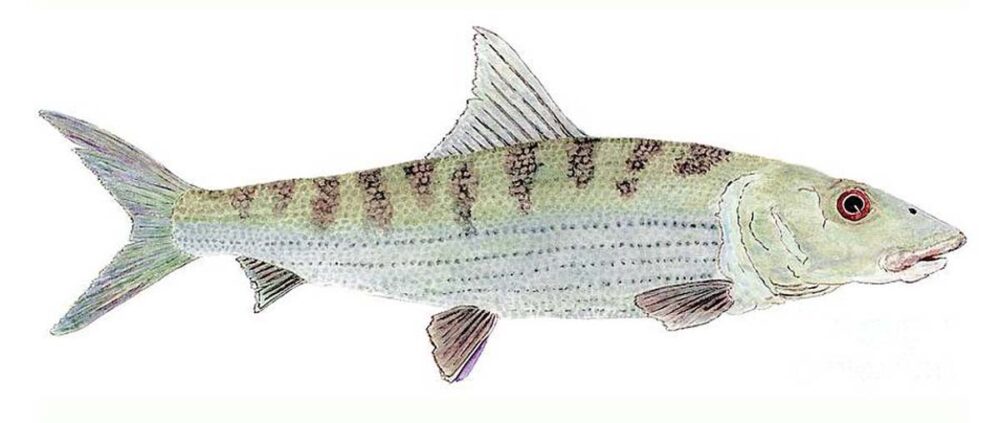
Albula Vulpes. Bonefish illustration by Thom Glace. Head for the Florida Keys in the spring and challenge the flats for a bonefish. Get a guide if catching is on your mind. Best bet, contact Florida Keys Outfitters.

Cost considerations apply to all RVs

Super small trailers, like teardrops, may seem budget-friendly, but their limited space and lack of undercarriage clearance can become problematic, especially on rough public lands and former logging roads. Maneuvering tight turns on narrow and rough roads can also be unsafe in these trailers.
Standard trailers, large or small, are generally not designed for rough-road use. To endure rugged conditions, you would need an Australian-style off-road trailer or a specialty brand, but prepare for significant additional expense.
For rugged road travel, a 4X4 pickup truck with a non-slide cab-over camper, such as the Cirrus 620, is a practical choice for individual anglers and hunters. The price of a new Cirrus 620 is approximately $50,000, while lightly used models can be found starting at around $20,000, reflecting significant depreciation relative to new units. However, additional features such as solar power systems or upgraded interior options will increase the overall cost, potentially narrowing the initial savings between new and used models. Compared to traditional lodge-based fly fishing trips—which often require significant expenditures on airfare, guided services, and accommodations—investing in a well-equipped truck camper arrangement can be more cost-effective for individuals who plan frequent excursions. Nonetheless, buyers should recognize that RV dealers may prioritize profit during negotiations, which can diminish the value proposition if costs are not closely monitored.
Most advertising exaggerates the off-road capabilities of a 150/1500 pickup truck with a camper. Even when the camper fits the truck bed, the combined weight, balance, and height can make travel on poor roads dangerous. Prioritize safety and do not rely solely on marketing claims.

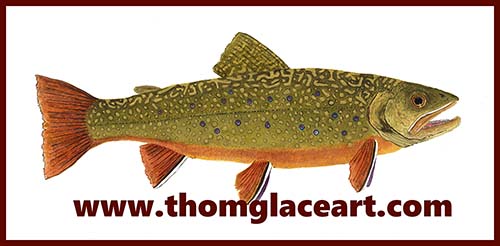
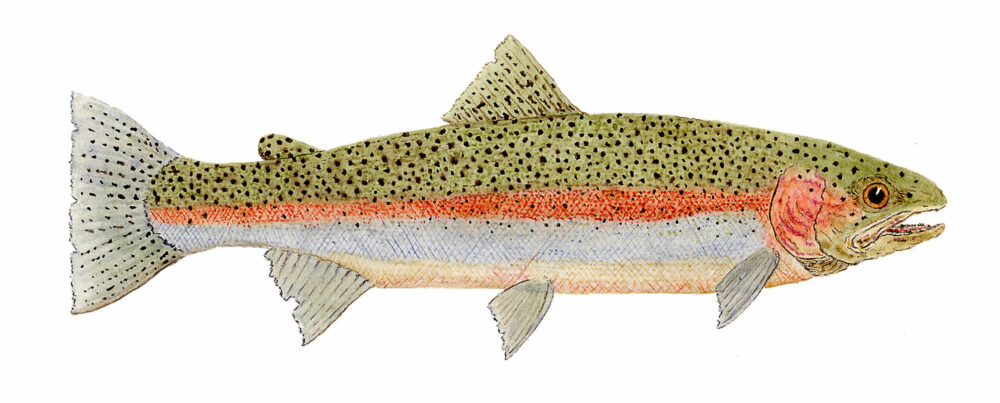
Adult Steelhead Trout by Thom Glace. The best steelhead fishing in North America is widely considered to be in British Columbia, Canada, especially the Skeena River watershed (Dean, Bulkley, Babine rivers) for trophy wild fish, with Alaska (Kodiak, Kenai Peninsula) and the Pacific Northwest (Oregon’s Rogue/Umpqua, Washington’s Olympic Peninsula) offering excellent options for ocean-bright steelhead. The Great Lakes tributaries in the US (NY, MI, PA) and Ontario, Canada, are also prime spots for migratory, non-wild steelhead runs.

A Ford F-250, Chevy/GMC 2500HD, or Ram 2500 is safer for carrying a truck camper off-road. Consider the 350/3500 series if towing or extra hauling capacity is needed

A significant factor with truck campers on backcountry roads is undercarriage clearance—under 10 inches is looking for trouble. It is best to achieve some of the clearance with larger off-road-rated tires and the rest with lift kits. Also, a long bed with a long wheelbase helps stabilize truck campers.
The lifts to protect the undercarriage can also include cushioning to provide a much smoother ride. Remember, larger tires reduce fuel economy. However, neglecting critical upgrades to save money can result in highly precarious situations once you are deep in the wilderness. For example, a severe undercarriage failure or a blown tire—both possible if you rely solely on factory equipment—could immobilize your RV far from assistance. In such remote settings, having only a compact emergency spare tire (‘donut’) leaves you vulnerable, especially if you are over a hundred miles from the nearest help on challenging terrain.

Priority

Safety remains the primary concern when selecting an RV for wilderness excursions. Lightweight truck campers such as the Cirrus 620 or 820 strike an effective balance among capability, comfort, and flexibility, allowing anglers to design fishing trips around their preferences and schedules. By prioritizing stable hauling with the right truck and considering factors such as cost and reliability, individuals can achieve a more adaptable, accessible approach to fly fishing travel, thereby reinforcing the overall argument for independent, customizable alternatives to traditional lodge-based experiences.
Designing your RV for extended stays lets you fish and camp longer in remote locations, maximizing your time and comfort. Adding extra power from batteries and solar panels means more day-to-day convenience and less need to leave your spot. These upgrades enhance your independence and the overall experience.

The Kanuti River and the Beetles Road (part of Kanuti National Wildlife Refuge) are primarily targeted for Arctic grayling and northern pike. Still, the region’s vast river systems also hold Dolly Varden, Lake Trout, and various Salmon species. Fishing access varies significantly by location; the nearby Kanektok River is known for its abundant runs of salmon, trout, and char. Image from Public Domain Images website. Photographer Steve Hillebrand, U.S. Fish and Wildlife Service. The list of road access to angling in Alaska is beyond belief.

Pooping

The cassette toilet, or a lesser version, is better than a black tank rig. It is a massive issue if bowel movements govern your stay. It is not an issue if you can adapt to using an excavated pit and a pee bottle.
On a five-month RV trip in New Zealand, I relied on a pee bottle, a waste bag, or a dug latrine, never using the black tank. My travel companion disliked it but didn’t complain.
A highly rated portable water filtration system will produce clean water from a stream almost endlessly. And, of course, grocery stores have filtered water for large containers you can get online for not much cost.

Ford F250 HD–several similar used 50/70 miles under $50K. A 250/2500 is a personal minimum for any off-road truck camper. Image online truck trader site.

What is needed to sustain a wilderness fly fishing stay?

Essential gear for a remote RV-based fly fishing trip includes items designed to maximize convenience, safety, and self-sufficiency. An awning provides shelter from the sun and rain, while auxiliary batteries and solar panels ensure reliable power in off-grid locations. Adequate lighting is crucial for visibility and safety, particularly during early mornings or late evenings. A plastic mat helps keep the RV clean by minimizing mud from entering indoors. Inexpensive surveillance cameras can enhance security when camping in isolated areas. Climate control is maintained through air conditioning or, in its absence, one or two Maxx air fans. For connectivity and communication in remote regions, systems such as Starlink and a cell phone booster are advisable. Together, these choices directly support adaptation to changing environments and contribute to a flexible, comfortable, and safe outdoor experience.

Inside:

Portable two-burner cooktop (induction or propane), DC fridge (not 3-way), lithium batteries, and a good solar generator setup.

Fly rods and reels:

Two for salmon in Alaska and Maritimes in Canda   ((8/9-weight). Two 5- and/or 6-weight for trouts in 8’6” to 9-feet. A fifth rod, a switch rod, is grain-weighted to suit use. I carry two extra spools because the switch rod (10 feet or less) can easily handle two lines above the rating and one below.

Choosing rods and reels

Brands are a matter of personal choice for both rods and reels. A personal preference is Nautilus Reels; they do not fail and require minimal maintenance. Most importantly, they have superior drag systems, so you don’t lose a salmon running free. For fly rods, I believe Lefty Kreh: “It’s hard to find a bad fly rod today.” However, for a spey rod or switch rod, R.B. Meiser Fly Rods are superior to almost all others (no, I don’t represent them).
For ease of casting, the high-end rods from Orvis are in the zenith class but are equalled by many others, fortunately. If you already own rods and reels that meet your needs, stick with them. Otherwise, don’t be tempted to drop big bucks or even a couple of hundred based on advertising, in any form. Go to a fly shop or shops and demo what temps you. Find what works and then buy.

Fly fishing shows offer the best opportunities to source and test-drive many fly rods.

The Chinook salmon (Oncorhynchus tshawytscha) is an anadromous fish, the largest species in the salmon family. Chinook salmon range from San Francisco Bay in California to north of the Bering Strait in Alaska, and the waters of Canada and Russia. Photo credit Dan Cook (USFWS).

Here’s a summary from randomly sourced websites known for real-time understanding of out-there RVing:

In summary, preparing for an outback stay in a Class B RV for two adults requires attention to three primary categories: essential utilities such as water, power, and waste management; consumable supplies, including food, fuel, and hygiene products; and self-sufficiency tools, such as navigation aids, repair kits, first aid supplies, trends, and necessary medications.
Rather than prescribing an exhaustive list of items, my main advice is to select provisions and equipment that best fit your individual needs and preferences within these parameters. This approach supports the overall theme of adaptability and self-reliance presented throughout this post.
NOTE: Featured image is a commons image photo taken by Joseph C Boone

SIDEBAR: Items to consider having aboard your RV

Treads for getting out of a stuck situation in the mud or aiding level parking take up a lot of storage space. If you have a Front Wheel Drive car, a Rear Wheel Drive car, or an RV van with Front Wheel Drive or Rear Wheel Drive, a soccer-mom van, yes, treads are a good investment. Personally, a 4X4 has always been enough.

Be sure to have a tire pressure gauge.

This hefty tire jack is a sturdy and stable alternative to the jack that came with the vehicle.

Portable air compressor

If you are a gorilla, you won’t need leverage, but if you’re not a gorilla, try this for better leverage.

A shovel is a must-have item.


Sponsored

Skip

Author Skip

More posts by Skip

Leave a Reply

Translate »