
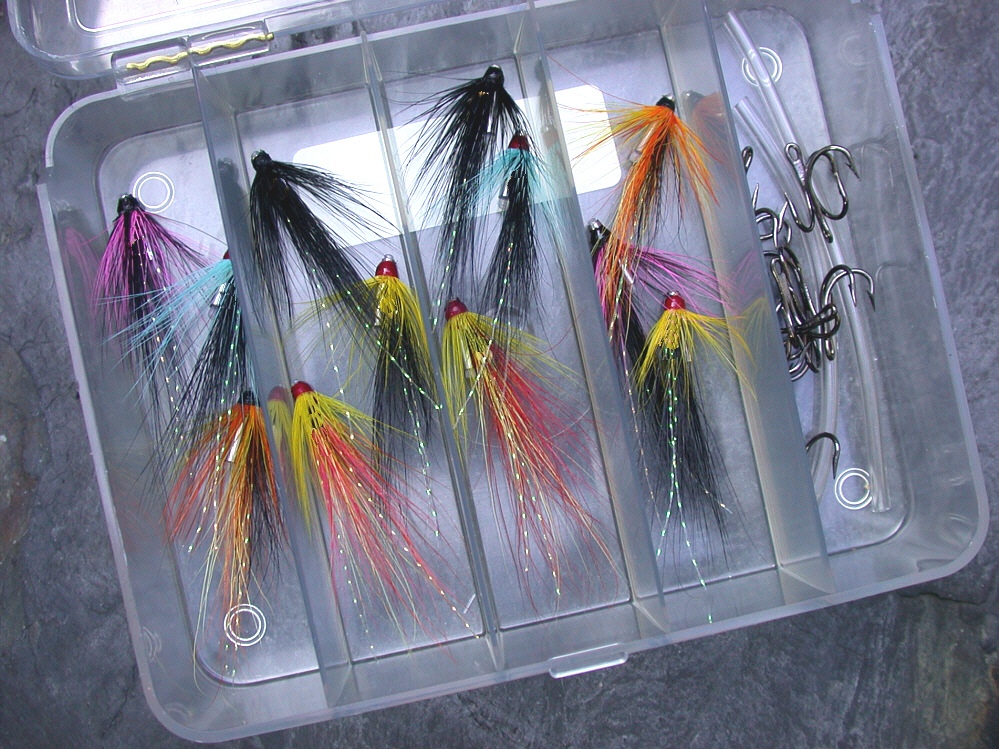
Flies image credit Grays of Kilsyth.
A fly pattern that requires weight can be a casting challenge

Henry Clement, Rehoboth Beach, Delaware, August 2023.
By Henry Clement
A subsurface fly is typically weighted by the size of the hook, through various weights added to the shank, or by placing a weight behind the fly on the leader. The goal is for the fly to sink quickly and drift near where trout feed, benthically. Weights used for hook-tied or tube-tied flies often include metal beads, lead-like wire wrapped around the shank, or a weight on the leader behind the fly. For hook-tied flies, extra-long shanks and heavy hooks make casting more difficult.
Casting heavy flies
Heavy flies tend to be tough to cast, especially with lighter rods. The rod weight (5-, 8-, or 12-weight) or hook size (1/0, 2/0, #1, or #2) alone does not provide much benefit.
It’s a challenge to handle a heavy fly, even for experienced casters
Using a medium-action or slow-rated fly rod, which many anglers prefer, makes casting heavy flies even harder—particularly if the rod leans toward its slowest setting.
For example, the Redington Crosswater ($200), popular in combo kits and known for its slow-medium-fast response, is only available in 5- and 8-weight versions. Its newer model, the Wrangler, along with others in the Far Bank lineup, addresses issues of slow response and limited weight options.
While combo kits aren’t the best choice for tarpon or ocean-run fish, the Wrangler 8-weight saltwater model can catch northern pike, musky, and common spawning run species like Atlantic or Pacific salmon, stripers, and other saltwater flats fish. However, it isn’t suitable for large king salmon, big Atlantic salmon, or steelhead trout.
A simple solution for casting larger flies, besides making a big, loopy cast—which can be problematic in the wind—is to tie tube flies yourself or find a fly tier who specializes in tying them.
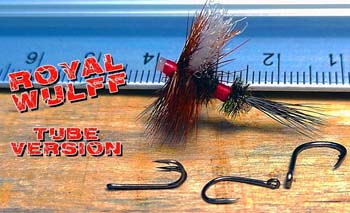
The Royal Wulff is one of the most famous and influential dry flies, which speaks to its enormous versatility and use across many species worldwide. Its tube version improves the effectiveness of this great fly. The photo is a screenshot of Ruben Martin holding the Royal Wulff tube he just tied.
Why and how do tube flies handle larger flies better?
First, because of their design. Tube flies aren’t connected directly to the hook and leader. Second, a tube fly can hide the hook if the fly has a tail, keeping the hook point near the fly’s tip and helping prevent short strikes.
NOTE: On a scud pattern, this wouldn’t be useful.
Lastly, a tube doesn’t necessarily need to be heavy or carry any weight if poly leaders are used.
NOTE 2: Spin fishers can also use poly leaders.
Moving up the ladder toward enjoyment is for those with a curious nature. Follow us and learn more about tube flies.
A big surprise is coming for striper anglers this fall
Sign up at HMH to learn more, or get on solid ground and purchase HMH’s complete tube fly tying kit [link below]. For less than $100, you’ll be fully equipped and shipped directly.
NOTE 3: Tying flies on a tube is simpler than tying on hook shanks.
Unlike traditional flies, a tube fly’s size and weight are not limited by hook size. The hook is chosen after tying, allowing greater flexibility to match the fly to fishing conditions. A benefit you should not deny yourself.
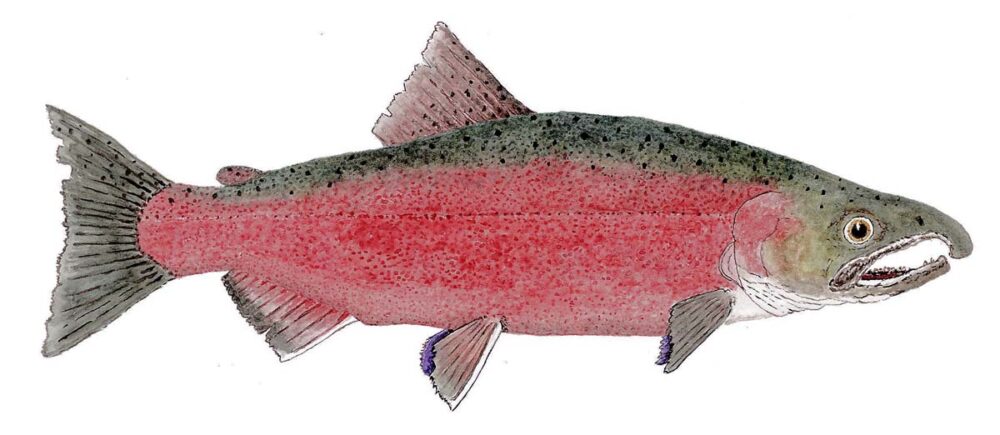
The illustration of male coho salmon in their spawning colors is created by the award-winning watercolorist, Thom Glace. The Tongass National Forest is home to all five species of Pacific salmon: King, Sockeye, Coho, Pink, and Chum salmon.
 Jon Larrabee is the principal owner of HMH and is a skilled engineer and machinist with over 35 years of experience as a canoe guide and fly fisherman, and is passionate about building, finding, and selling products that exceed your outdoor expectations. He loves customers and welcomes feedback and suggestions.
- WEBSITE
- Phone
207 729-5200
- Fax
- Address
432 Elm St US Rt 1, Ste H, Biddeford, Maine, 04005
Sponsored