
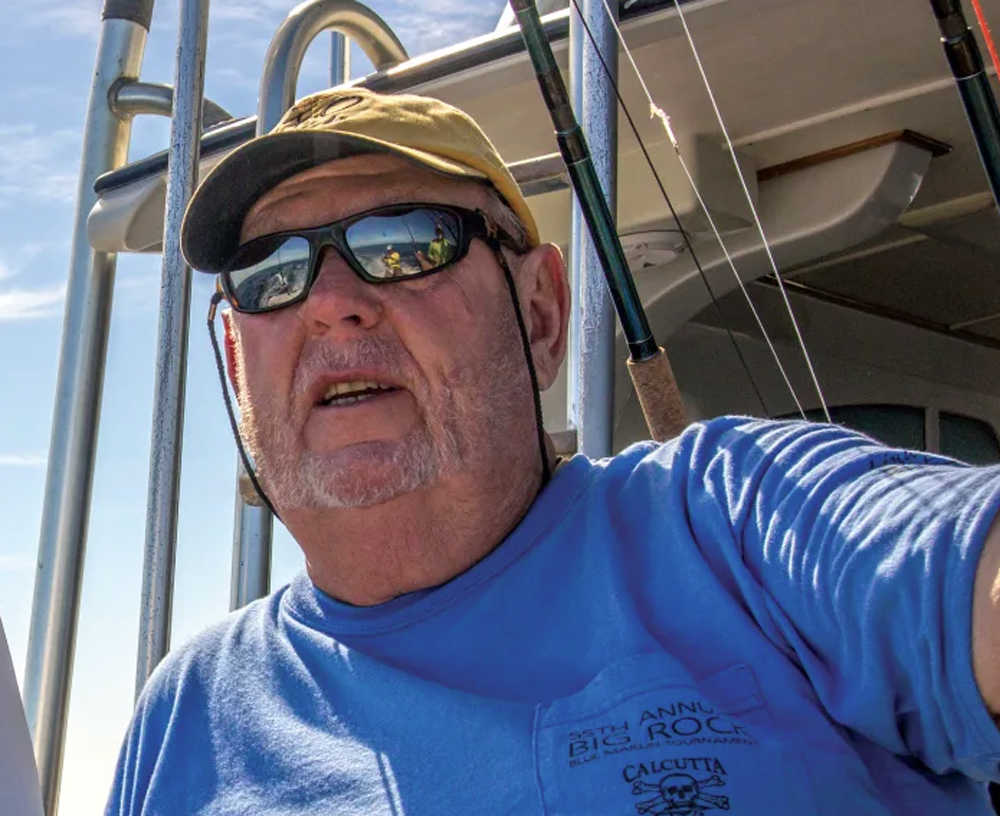
Jake Jordan, the Old Iron Man of Oceans, is a trailblazer in fly fishing—though you might not know his name. He exclusively fishes for tarpon at night in the Florida Keys. Jordan pioneered techniques for catching billfish by letting the rod and reel do all the work, and he rarely gets skunked. For him, the only fly reel worth using is a Mako. Photo: Brian Horsley.
My reminiscing now seems mostly about fly-fishing and is still as thought-provoking as looking into a wood-burning fireplace
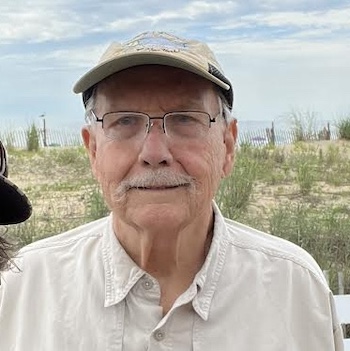
Henry Clement, Rehoboth Beach, Delaware, August 2023.
By Henry Clement
Once known only through years of wandering journeys
In defiance of technological advances, including the latest threat to thought—AI—the ‘soul’ of fly fishing thankfully remains untouched. Despite algorithms that can now predict hatches before a trout sees the first mayfly wing dry, spawning runs of bonefish with astonishing precision, and satellite imagery revealing hidden rivulets in riverine properties and benthic shifts on saltwater flats.
Materials
Rod designers now model flex profiles using software once exclusive to aerospace engineering, and fly tiers now study insect morphology at the microscopic level. In many ways, the modern angler is more informed and better equipped than at any time in history.
Yet, when by skiff or by foot one enters the flow of fresh and saltwater, all that knowledge condenses into something far simpler
The river does not appear as data, nor do the tidal currents on the flats. They move, change, and breathe in ways that defy complete understanding. A seam within the river or a tidal pool that held fish yesterday might be slim pickins’ today.
Light shifts, pressure drops, currents subtly realign against stones or coral
What remains vital is not what can be calculated but what can be observed—those small recognitions that develop from simply paying attention. The angle of a rise to take a fly. The hesitation in a drift that invites a strike. The faint shadows of life beneath the surface require an accurate cast to reveal.
Fly fishing endures as a hands-on act in a digital era
Fishing with a fly demands presence more than precision, awareness more than analysis. You can arrive with every advantage—perfect tube fly patterns, mapped access, ideal conditions—and still be humbled by rejection. Conversely, a single unassuming tube fly, tied without regard for measure and weight, can come alive in the right moment through nothing more than instinct and feel.
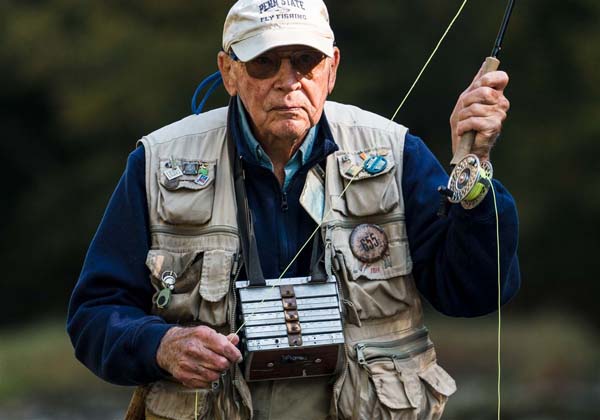
Joe Humphreys: The Old Man and the River. Joe Humphreys is a nationally known fly fisherman, conservationist, author, and educator. He has been an instructor for over 60 years. Joe has traveled the world representing the U.S. in fly-fishing competitions, has guided presidents and celebrities, has held the PA state record trout, has hosted the first national fly-fishing show on ESPN, and has been inducted into the Fly Fishing Hall of Fame. Photo by John Hayes, the once-famous Pittsburgh Post-Gazette.
There’s also a deep, unsolvable mystery at its heart
No model can fully explain why one fish takes and another ignores. No piece of gear, no matter how advanced, can duplicate the quiet psychological tension of anticipation as a drift completes its path or a wayward cast tempts a tarpon attacking that new tube fly.
The most meaningful moments in fly fishing remain unwritten and unrepeatable, shaped by variables too subtle or numerous to capture again fully.
Technology has sharpened fly fishing, yet it has never touched its core. It has made us more capable, but never less dependent on patience. More efficient, yet still subject to uncertainty. The essential exchange—the offering of imitation to a wild fish in moving or still water—remains as it always was: uncertain, personal, and profoundly human.
The spirit of my fly fishing lives on not because it resists progress, but because it exists beyond it. It found a place for me in the pause before the cast, in the choice to wait rather than rush; in the quiet understanding that my success is never fully mine, only briefly granted. No advancement has changed that truth, and none likely ever will.
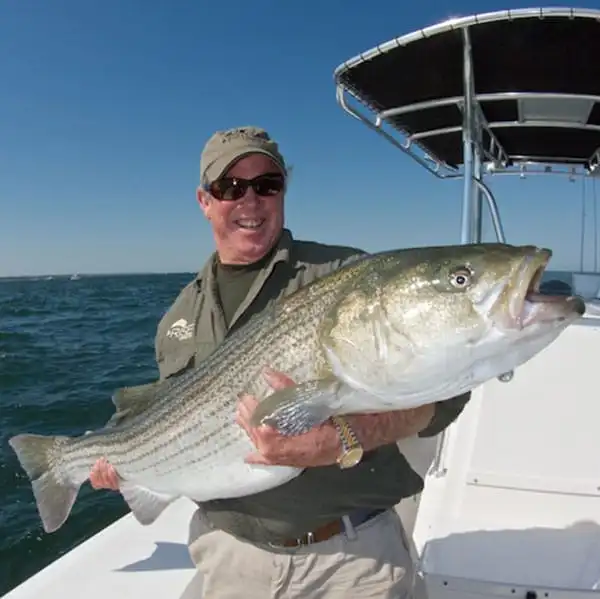
East Hampton, New York, Captain Paul Dixon. The Old Man of Montauk. Paul has been featured on TV’s Charlie Rose Show; The Outfitters, presented by Ford Motor; ESPN’s fishing shows Guidehouse Montauk, The Walker’s Cay Chronicles and Spanish Fly; NBC News; and Barbara Koppel’s ABC Prime Time Special “The Hamptons,” as well as in The New York Times, Outdoor Life, Fast Company, Forbes FYI, The Miami Herald, New York (Magazine), Salt Water Sportsman, Salt Water Fly Fishing, Field and Stream, and Newsday, among others. Photo credit Saltwater Sportsman Magazine.
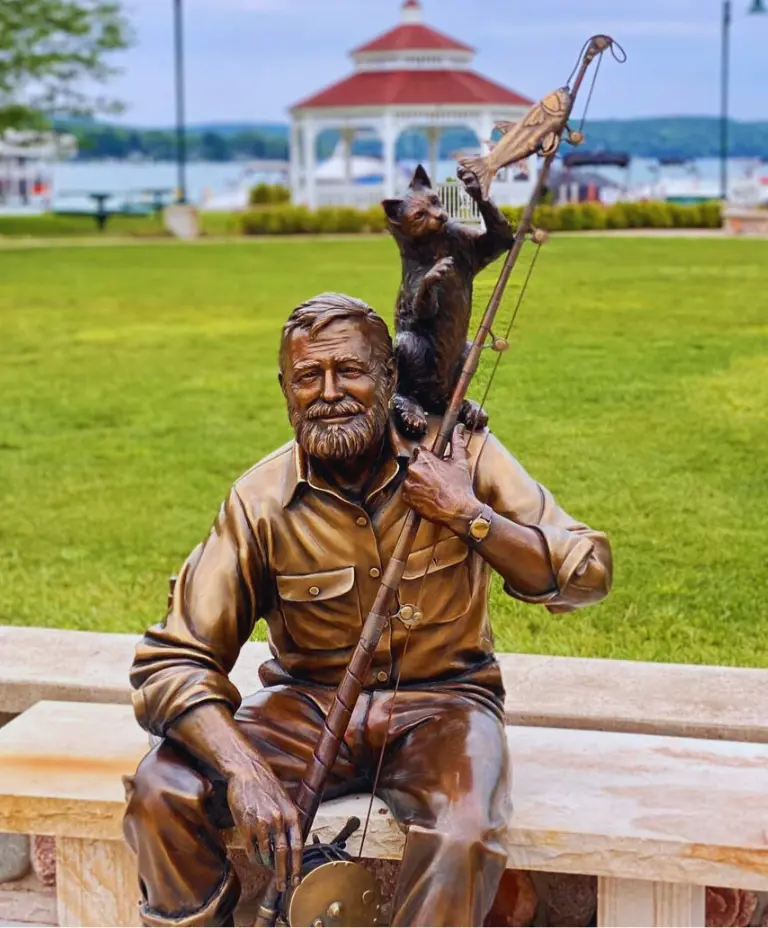
NOTE: Featured Image is “Old Man and the Cat” by George Lundeen. The old man is Ernest Hemingway, and the work is inspired by his story “The Old Man and the Sea.” A common image.
My brother Douglas’ favorite poet’s poem: “The Fisherman” by the Irish poet W.B. Yeats. Written in 1919.
Although I can see him still,
The freckled man who goes
To a grey place on a hill
In grey Connemara clothes
At dawn to cast his flies,
It’s long since I began
To call up to the eyes
This wise and simple man.
Sponsored