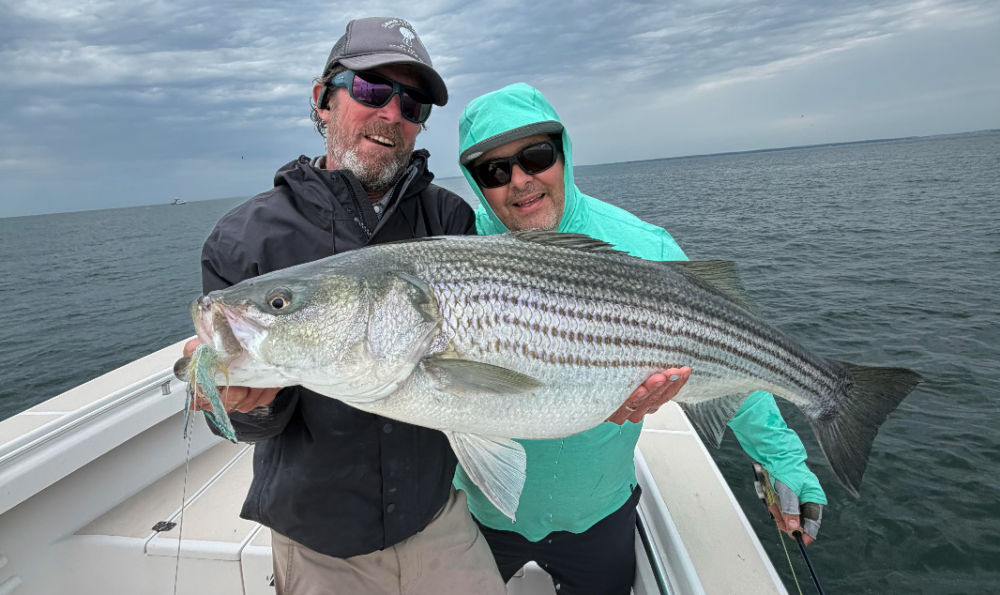
Yesterday, [6/23] on the North Fork–Long Islnd Sound flats with Capt. Andrew Derr, holding a client’s striper [Frank Pace]. Andrew says a few spots still open in the upcoming weeks. Click here for info…
It often feels futile to tell people that tube flies can make them better anglers and help them catch more fish. The fly-fishing industry rarely champions innovations it perceives as threats, so the evidence stays hidden, and critical thinking seems to be in short supply. As a result, another good idea gets overlooked.
How Good Ideas Get Run Off The Road
By Henry Clement
Consider Tenkara, one of fly fishing’s oldest forms. For centuries, illiterate peasants in Japan used it to feed the wealthy a delicacy, passing down rod-building, gear, and techniques solely by word of mouth. Enough knowledge survived to give the Western world a practical new method for fishing small streams. Remarkably, it was Daniel Galhardo who introduced Tenkara to the West, spending over a decade generously sharing everything he knew—even when some took advantage. Now, with his voice diminished and the livelihoods of small businesses like Karin Miller’s Zen Tenkara punished by tariffs. Tenkara has lost its advocate unless Karin rides into town as the new sheriff; she’s smart enough and articulates the joy of tenkara fly fishing.
Tube flies still require wearing a COVID mask in most quarters
Tube flies have followed a similarly odd path before arriving in North America. Their initial acceptance—stretching from California to Alaska—came from the longstanding faith of Scandinavian salmon anglers. In Europe, tube flies graduated to all species; here, we’ve mostly lagged behind. Strikingly, our ancestors were more open to risk and new techniques, readily adopting better ideas from others.
 Scrutiny
But now, tube flies—like Tenkara—are seen as a threat by enough industry insiders to make shop owners wary, while big-box stores only care about trends and price. Not every new idea is good (just look at the TV craze for portable air conditioners), but once something is proven valuable, it shouldn’t be cast aside. Today, anglers must sift through misinformation on social media, unmoderated forums, and partisan news sources. In this climate, the misinformation “industry” spreads unchecked.
In the fly-tying world, tube flies do receive good reviews, but many popular tiers, YouTube hosts, and podcasters treat them as niche—okay, but only for certain species. It’s like saying only grown men eat steak, or eggs are only for breakfast: arbitrary restrictions. Thankfully, not everyone is so narrow-minded. Tim Flagler, Jay Nicholas, Ruben Martin, and Brian Flechsig have all helped broaden the acceptance of tube flies.
NOTE: There are many others who tie and fish tube flies.
Tube flies catch more than salmon
Tube flies are a European staple. Anglers across Scandinavia and the UK use them for far more than Atlantic salmon—think brown trout, grayling, pike, zander, sea trout, and even carp. Tied on lightweight plastic, copper, or aluminum tubes, they let you cast bulky baitfish patterns or large profiles on lighter rods, without sacrificing action or depth. In Europe, tube flies aren’t a niche salmon tactic; they’re a general-purpose platform that improves hookups, brings more fish to hand, and keeps the fly in play.
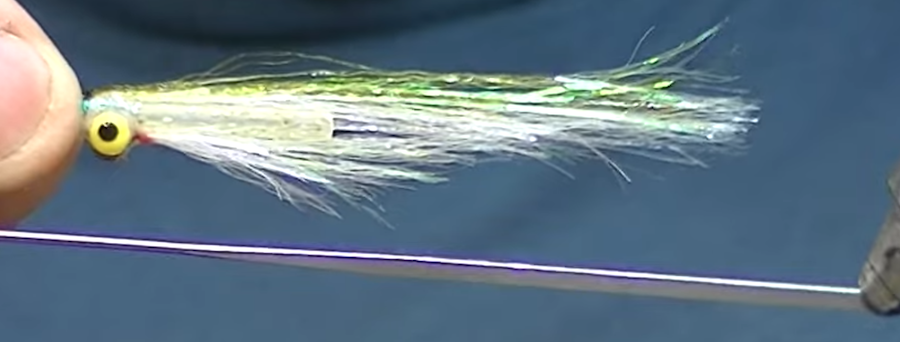
Minnow Streamer Tube Fly Tying Instructions By Ruben Martin
So, how do tube flies outperform hook-tied flies?
First, they’re easier to tie once you master proportions (no hook shank as your yardstick). Beyond that:
- The hook is often hidden and doesn’t dictate fly size or weight.
- A damaged hook on a hook-tied fly means the whole fly is ruined; with tube flies, just swap the hook.
- ‘Fish on,” the hook often pulls free, letting the fly slide up the leader and reducing fish leverage.
- The only thing securing the fish is the hook, not the fly, so leverage is lost, and hook-hold improves.
Conclusion
My old advice—“use tube flies for flexibility and durability; hook-tied flies for speed and simplicity”—was too conciliatory. The reality is that tying, casting, and fishing tube flies is measurably better and easier across all my experience, from tarpon to crappie and bonefish to trout.
Here’s what I don’t miss:
- Winding thread or material under the hook bend, or getting cut off by the point
- Using long-shank hooks for flies that end up too heavy to cast
- Throwing away flies because of damaged hook points
- Carrying boxes of hook-tied flies instead of a few baggies of tube flies and packs of hooks
- Losing fish to short strikes or leverage
- Discarding a chewed-up fly after just one or two uses
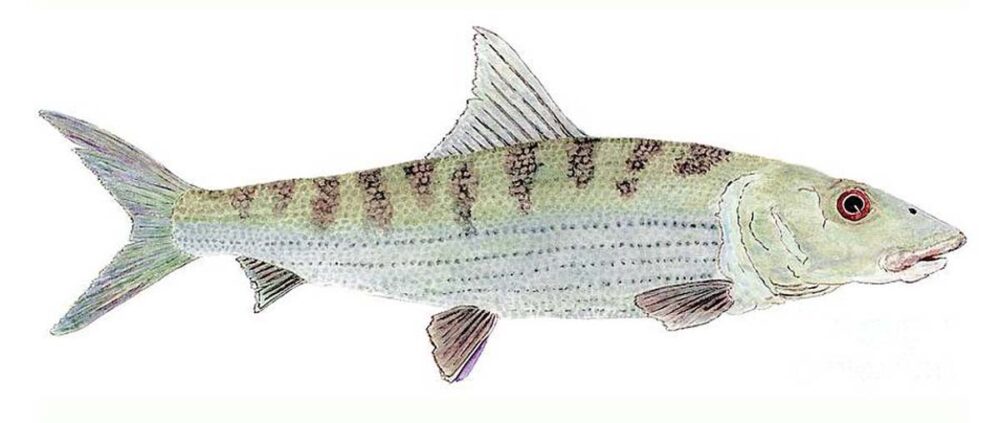
Albula Vulpes. Bonefish illustration by Thom Glace …
I don’t miss hook-tied flies at all
NOTE 2: Tongass salmon returning to spawn. Photo by Galyna/Envato
Everything you need to start tying tube flies—for under $99 delivered
No need to relearn if you already tie traditional hook flies. Jon Larrabee, principal owner of HMH, is a highly skilled engineer and machinist with over 35 years of experience.
He is also an accomplished canoe guide, tube fly tier, and fly fisherman.
 Contact
Phone
207 729-5200
Fax
info@hmhvises.com
Address
432 Elm St US Rt 1
Ste H
Biddeford, ME
04005
Ste H
Biddeford, ME
04005
Watch Ruben Martin’s video on tying a tube fly
Sponsored