
Karin Miller, founder of Colorado-based Zen Tenkara, visited with Fly Life Magazine.com Editor-at-Large Steve Hudson for a far-reaching discussion of how tenkara fits into the bigger world of flyfishing. Here’s a look at what she had to say.
Fly Life Magazine.com Editor-at-Large Steve Hudson, who also enjoys fly fishing, fly tying, hiking, and the great outdoors, has done so since he was a child. He has more than 30 books in print and has written thousands of articles; he knows how important it is to have great how-to books, accurate destination guides, and clear and readable instructional material.
Steve Hudson is Fly Life Magazine.com Editor-at-Large. He has enjoyed fly fishing, fly tying, hiking, and the great outdoors since he was a child. He is the author of more than 30 books and thousands of articles.
By Steve Hudson
Karin Miller, owner of Zen Tenkara in Fort Collins, Colo., is a busy person. We’ve been trying to get together on the phone for a couple of weeks now, playing telephone tag, trying to squeeze in a couple of hours so I can put on my reporter’s hat and get out my notepad. But she’s hard to catch. One day, she’s presenting a seminar at a flyfishing show. Next, she’s fine-tuning the latest rod offering from Zen or maybe talking to a fly-fishing club. A few days later, she’s headed out the door to catch a flight to some far-flung corner of the globe, tenkara rods in hand. But I am persistent, and we finally connect. My goal? To talk with her about the interface between tenkara and the rest of the fly-fishing world.
Our conversation is fascinating
To steal a cliché, tenkara has taken the angling world by storm. This no-reel, fixed-line approach to flyfishing, which developed in Japan centuries ago, is straightforward, low- cost and remarkably easy to learn.
Karin speaks frankly about many things during our visit – everything from what it’s like to be a female in the largely male-dominated flyfishing industry to how her own company, Zen Tenkara, came to be. She talks directly about the business side of things, including how the traditional flyfishing retail world views tenkara and how the global economic landscape affects the development and marketing of new gear.
Karin also has a lot to say about tenkara as an entry point to fly-fishing – and, not surprisingly, she speaks at length about how tenkara is perceived and how it fits into the rest of the fly-fishing world. I found her thoughts and perspectives fascinating, and I think that you will too.

Nothing surpasses energy and commitment.
How did you get into tenkara fishing?
My ex-husband had gotten into fly-fishing. He and I would fly fish together, but I wasn’t really excited about it myself. I found it cumbersome and complicated with all the complicated gear, the setup, the knots, the flies, the line management, and all. There was so much to learn before you could really start to enjoy it. But then one year I began looking for something unusual to give him for Christmas.
Tenkara USA had just introduced tenkara into the US, and I thought a tenkara rod would be something that he did not have. So I got him a Tenkara USA rod. When we fished together, he always spent a lot of time setting up my gear. One day, after I had gotten him the tenkara rod, he quickly attached a line and fly and handed it to
me. He said, go fish while I set up your rod and reel.
By the time he finished rigging everything up, I had already landed a bunch of fish on tenkara. I looked at the regular rod and said, “I don’t want that…why haven’t I been fishing with tenkara all along?” So I gave up the traditional rod-and-reel and started fishing tenkara almost exclusively.
Is that what led to Zen Tenkara?
In Colorado, where we lived, we did a lot of hiking and camping, and took the tenkara rod with us. We said, “Wow! This is great!” and decided that we needed to start a little tenkara business. So, we started Zen Fly Fishing Gear in 2010, with tenkara rods being just one part of the business. Then, when we traveled, we began stopping in fly shops to talk to them about Zen anywhere we went.
One of the first shops we visited was Mountain Anglers in Breckenridge, Colo. Jackson Streit was and still is the owner, and I stopped in to ask him if he’d ever heard of tenkara. He spent quite a bit of time talking to me, and I finally just asked him if he would like to carry the rods we were offering. He said maybe. So I went in the next day and did my very best sales pitch, and he brought us in. That was our very first retail dealer.
Were you doing Zen Fly Fishing Gear full-time at that point?
At the time, I was teaching full-time in early childhood special education, though I saw the potential in the tenkara field. But my then-husband’s interests were going in other directions. We eventually divorced, and I took over the business completely by 2015.
 Being female in the fly fishing business today
What was it like to suddenly be the female owner of a fly-fishing company? It was scary. I didn’t feel competent. I felt inadequate. And being a female? I was not just a woman in a male-dominated industry. I was a woman talking about tenkara rods. The industry was not very welcoming to the idea of tenkara. That was hard. It was very difficult to get anybody to listen to me. That’s why I say how much I appreciate Jackson Streit. He listened, he was respectful, and he was open-minded.
So, everybody was not that way?
Oh no. I got physically pushed out of a fly shop once. I won’t say what shop it was. I was doing cold-calling, walking into fly shops, and trying to get brick-and-mortar stores to carry the product line. So I went into this shop and tried to talk to the owner. He sort of half looked up when I started talking about tenkara. But when I asked him if he might be interested in carrying the rods, he got very upset, very agitated, and came around the counter and said that it was people like me who would be the death of the fly-fishing industry. While he was saying all of this, he was poking me in the shoulder with his finger and walking me toward the door. I will never forget those words.

Karin makes her point.
What do you think he saw as the threat? Was it you being female? Or was it tenkara?
Oh, it was definitely tenkara. At the time, Tenkara USA was marketing the idea of one line, one fly, as a better way of doing things. I think a lot of fly shops were hearing that and asking how they were going to make any money then? The fact is that tenkara can be enjoyed for a fraction of the cost of traditional fly fishing. But if fly fishers don’t need all those flies and all that gear, what happens to the fly shops’ sales?
I get it. Tenkara threatened traditional fly shops. They were worried that if tenkara caught on, it would hurt their sales
I think, too, that I was new to the industry and people thought, “Who is this woman coming in here and going on about tenkara?” I was a nobody, a woman, and I was trying to sell a product that many shop owners thought might hurt their business.
The Anglers perspective on tenkara
Early on, what did the angling community think of tenkara? Many anglers had very strong negative feelings towards the method. If you mentioned tenkara in a social media post, hundreds of negative, harsh comments would follow. It was rough. It’s taken years for the flyfishing community to begin to accept and even appreciate tenkara in various applications. But initially, the angling community was pretty hostile.
My personal opinion is that tenkara was so simple and intrinsic that it kinda demystified flyfishing. Tenkara took the “hero” part of fly-fishing away and offered up something more pure, even delicate, that maybe didn’t seem masculine enough for many male fly fishers. By keeping flyfishing complicated (and expensive), it keeps the sport special and elite, in a way.
Fly fishing requires a number of skills. For most anglers, it takes years to become fairly good at casting and to learn to read water and select flies, and all the other different elements required to have decent success on a flyrod. Once you become proficient at those skills, I think some associate it with a coolness factor – the guy who can lay out 90 feet of line (even though most trout are caught at an average distance of 25- to 30-feet). And tenkara didn’t/doesn’t play into that. In fact, it’s probably just the opposite. And finally, when you’ve worked hard at something and are finally good at it, why rock the boat and start learning something new? Something that you won’t immediately be good at?
Why the resistance to learning something new?
Because it’s risky business to try something new. You have to be willing to not be good at it while you’re learning. I think a lot of people said, “Why would I want to put myself in
a position of trying something [tenkara] that I may not be good at, something where I’ll be a beginner again?” Some see that as an exciting opportunity to try something new and challenge themselves. But maybe because it’s a male-dominated sport, there are others – a lot of males – who don’t want to put themselves out there where they may not perform as well as they would on their familiar traditional fly gear.
Taking Tenkara and Karin seriously
How did you get fly fishers as well as dealers to look beyond that and take you seriously? One way was to start pursuing bigger fish. The same business owner who pushed me out of his shop also pushed me to go after bigger, more challenging fish. “Go land a bonefish on that thing,” he said, “and then come back and talk to me.” And I said, “Okay, if that’s what it takes, I’ll go land a bonefish on my tenkara rod.”

Hudson’s definitive book on tenkara has influenced interest in fly-fishing tenkara in the Appalachians. Photo provided by ON THE FLY SOUTH. . .
Did you?
Eventually. I found a guide in the Florida Keys and booked a bonefish trip. I was still married but separated at the time, and about four days before the trip, my ex- husband basically said, “I’m not going.” And I panicked because I had never saltwater flyfished before! I called a friend and said, “What should I do? Should I cancel the trip?” My friend reminded me that I’d already paid for it. “Just go!” she said, adding, “If nothing else, you’ll go down there and eat good seafood and have a rum and Coke and enjoy yourself, even if you don’t get the bonefish.” So I went. But I also called the guide and talked about cancelling.
And what happened?
The guide said that if somebody else wanted to book the time, I could get a refund. But if not, come on. Nobody else booked the time, so I said, “Okay, then, I guess I’m meeting you on the
dock.” On the way, I stopped in a fly shop and waited till the customers in the store had left. Then I told the guy behind the counter that I was going after bonefish with tenkara and asked if he would help me build a bonefish line for my tenkara rod.
“Isn’t that one of those little collapsible things they use for trout?” he said, and I said yes and pulled out my rod to show him. He looked at me like I was crazy as I lay out and extended the big and beefy Zen Kyojin tenkara rod. But he helped me build a line and set up a leader (it started at a 50-pound test and went to 40, 30, and then 20), and I was ready to go.
I showed up on the dock the next morning, reminded the guide that I wanted to catch a bonefish, and showed him my tenkara rod. He basically said, “Well, okay. It’s your money, lady, and we’ll do whatever you want.”
 Did you get a bonefish?
No, I didn’t catch a bone on that trip. But I landed a 3- to 4-foot hammerhead shark, plus a small tarpon about 34 inches.
Can you talk about those tarpon?
We were moving to a new area and just happened to see some tarpon rolling and actively feeding. They were kind of distracted, so we were able to get within tenkara casting range. So I cast to them and, lo and behold, I hooked and landed a tarpon. It was thrilling, and it was my first-ever tarpon. We kept fishing, and I finally broke the rod on an 8-foot shark! I never got a bonefish on that trip, but the tarpon and shark were more than amazing, and landing them on tenkara made it even more spectacular.
So you tried again
Yes. Eventually, I made it down to Mexico to fish in Ascension Bay. I took the tenkara rod. I fished with a guide from Pesca Maya Fishing Lodge, who was fantastic and told him I wanted to catch a bonefish on tenkara, and he said, “Why don’t you catch one on a regular rod first and see what it’s like, and then try for one on tenkara?” So I did. He put me on a school of bones, and I got one on a traditional fly rod – a small one of about 2-pounds. And I said, “Ah! That wasn’t too hard!”

The package arrives.
Then we broke out the tenkara rod and landed a handful more
Meanwhile, I continued to learn about flyfishing with tenkara. Sometimes the guide would laugh at me. But he didn’t feel threatened. He was open-minded and thought it was neat and fun, and loved just trying something new. My enthusiasm was growing, and we had a great time. Sure, sometimes we broke a rod, and sometimes we didn’t. But if we broke one, it wasn’t a failure. It was just part of the learning. And I think that is what earned the respect of folks in the industry and of traditional fly fishers.
The evolving view of tenkara
So you hung in there as folks gradually began to embrace tenkara? Yes, though there were many times I wanted to walk away from the business — frustrated at the industry, tired of the pushback and tenkara jokes. But I was passionate about the method and how it could open the doors to fly fishing for so many people. It’s easy to get buried in all the negativity, but those are the times when you have to believe in yourself. If you don’t believe in yourself, why should you expect anyone else to believe in you?
Do you see changes in the way the industry approaches you as a female rod company owner?
Oh my goodness, yes. So much! It is really neat to see the industry evolve, not only towards women but also towards tenkara.
What do you think made the industry change?
I think the industry eventually realized it was flattening out. I think that for a long time, the industry’s target customer was older, wealthy, white males. They realized that to ensure the sport’s longevity, they needed to start marketing to younger men. But somewhere along the line, they realized that there was 50 percent of the population to which they were NOT marketing. Women now had their own careers – and disposable income. And those women were looking for things to do and ways to spend their money. As a result of fiscally motivated decisions, there was also a marketable equity factor. Marketing to women and supporting them as fly anglers was also the right thing to do. These days, many fly shops have young people working behind their counters. They have grown up seeing women in fly magazine ads, women on the rivers, gear designed for females, and all the rest. Now there’s a whole generation of anglers for whom it’s normal to have women involved in fly fishing.
 Tenkara was an entry point
What’s the typical trajectory when someone new enters the sport of flyfishing? There is data out there on how many new anglers take up traditional flyfishing each year, compared to how many are still doing it a year later. It’s almost a wash. Flyfishing constantly attracts new people, but so many of them get frustrated and quit. They go out once or twice, but then their gear sits in the garage and never gets used again. That’s a shame for the would-be flyfisher. But it’s bad for the fly shop, too, since it means that they never make another flyfishing purchase either. When newcomers are getting started, they make this great purchase, and fly shop owners say, “Cool!” But if they never come back to purchase more gear, which really doesn’t translate into business
growth.
So, is tenkara a better entry point for anglers and fly shops alike? I think that it can be. Tenkara is a great gateway into flyfishing. It’s less complicated, it’s less expensive, and the learning trajectory is much faster. That makes it accessible to more people across more demographics. For all of those reasons, I think that the likelihood of a beginner sticking with the sport when they have learned to fly fish using a tenkara rod is greater than if they started on a regular fly rod. Besides, once a new angler discovers tenkara, that individual is likely to branch out into
traditional flyfishing, too. I don’t think I know any tenkara angler who hasn’t at some point said, “I think I want to get a traditional fly rod and reel too!”
But they don’t give up tenkara. They just add traditional gear. They broaden their enjoyment, and they spend more money at the fly shop.
Tenkara and the female fly fisher
Can tenkara help women enter the world of fly fishing? Yes, though I wouldn’t say just women. I think all anglers would benefit from starting with tenkara.
How do women tend to embrace tenkara?
Many women are still kind of resistant to tenkara. I think a lot of the female anglers who use tenkara are older women who were introduced to it through their spouses or partners – that is, through older men who were experienced in fly fishing. Those men initially tried to get women interested in fly fishing via traditional western-style gear – but in many cases with only limited success. So those men introduced tenkara to the women in their sphere as an alternative to
traditional flyfishing.
So you’re saying many women have a hard time discovering tenkara on their own?
Yes, because opportunities to do so are rare. Very few fly shops carry, offer, or promote tenkara fishing or sell the gear at all. If you want to learn how to fly fish, you generally walk into a fly shop, but they’re not going to tell you about tenkara. They’re going to sell you a whole regular rod and reel setup. Most tenkara anglers have been introduced to the method by another tenkara angler.
But there’s more to it than opportunity?
Yes. I think there are young 20-something women who might be interested in tenkara, but they want the respect of their male counterparts and thus gravitate toward traditional gear to be respected on the river and in their fly fishing. They seem to worry that they would be less respected if they used tenkara, and that goes back to the whole cool-factor thing.
 Do you feel that you are respected as a fly fisher and as a female fly fisher who uses tenkara?
Over the years, I think that my fly fishing resume has earned me a lot of respect in the industry – especially when people began paying attention and realized that, wow, she did that on a tenkara rod! That’s why I started chasing bonefish and other more challenging species – to show people that with the right skill set, tenkara definitely has a “cool” factor, whether you’re male or female. Plus, my years of experience with tenkara have taught me so much about fish management, rod angles, and casting. Tenkara has made me a better fly angler on the reel.
Tenkara and your local fly shop
Are fly shops giving more attention to tenkara these days? Eight years ago, I was in more shops than I am today. I have pulled out of a number of shops and stopped trying to get into new ones.
Why is that?
Many shops just don’t seem to know what to do with tenkara. Here’s an example. Just recently, a shop reached out to me. “We are really interested in bringing you in,” they said. I talked to them about doing education, seminars, and meet-and-greets because they didn’t really know how to talk about tenkara. They told me that the price points and margins were good, and they did an initial order. But that was it. If a shop has staff who don’t have experience with tenkara, they won’t be able to sell or talk about it. They’re going to push their favorite traditional rod or maybe the rod with the highest price point. “That’s where we’re making the most money,” they say, “so let’s push that.” It’s sad but mostly true.
You’ve said that one reason fly shops hesitate to carry tenkara is that they fear that tenkara would adversely impact sales of traditional gear. Should they reconsider? It doesn’t make sense to me from a business perspective not to carry tenkara, and I would say that even if I did not own a tenkara rod company.
For example, I think many people are interested in learning to fly fish and even in tenkara. But when they go into a fly shop and ask about equipment, they’re steered toward traditional western-style gear. Since tenkara isn’t really in the fly shops, they’re not being told about it or how easy it can be to learn. If no one tells them about it, they will probably never know it’s an option.
Global impact of chaotic tariffs
How are you dealing with the tariff situation? It’s a nightmare. It’s just crazy. For instance, I had a run of one rod model that was ordered and produced. But bringing it in would have cost me more in tariffs than the actual product. My cost more than doubled. Then what do I do? If I pass the cost along to the consumer, a $250 rod suddenly costs $600.
And if the tariffs change again, what happens then?
It’s just impossible to know how to respond, and it’s even worse as a small business. Other manufacturers are saying they’re in the same situation, even if it only involves
some components that they source from overseas. We’re just trying to stay nimble and flexible, taking each day as it comes in these uncertain times.

You do not have to be single-minded. All fly fishing is fun.
What kinds of things complicate overseas manufacturing?
Many overseas manufacturing facilities are huge operations, but our tenkara rods are relatively small orders in comparison. Small runs are less cost-effective for manufacturers. This means it is critical to find a facility willing to work with you and to run smaller, more frequent runs. There’s also the matter of specialized requirements – for example, the very fine tips found on tenkara rods. Finding facilities and OEM manufacturers that can meet your needs can be costly, too. Often, you spend time and money on R&D (research and development). Those costs ultimately have to figure into the price of the finished product.
Is stateside manufacturing feasible?
I would love to move production stateside and quit dealing with overseas manufacturing, but it’s not an easy process. But I think a lot depends on how all of this plays out. Part of the problem is that US manufacturing lacks some of the technology and capabilities needed to produce certain products. And of course, it’s much more expensive to manufacture in the US. That additional cost is reflected in the final price consumers pay. And often, we find that new price points just don’t align with what the market is willing to pay. Here’s a case in point. We tried to produce a fully US-made rod, but the manufacturer struggled with the technology. Four years into the project, and we still didn’t have a solid working prototype. They simply couldn’t produce it. The costs in terms of time and money were getting too high. When we finally got close enough to run speculative numbers, the rod was going to cost about $800. No one was going to spend that much for a tenkara rod, so we walked away. Money spent, nothing in hand.
So, widespread US manufacturing? If it happens, it won’t happen quickly
How about smaller, less expensive products like line? Our All-Purpose Tenkara Lines were being made stateside for years, until Covid changed things. The manufacturer had its own products and stopped doing custom work. They delivered a final run of the product, but then they said, “That’s it. We can’t keep up with our own requirements.”We tried for more than a year to find another US company to produce our lines. I finally found someone in Florida who could do the kind of extrusion work I needed. I spent a fortune in materials and time over about two years, but they still couldn’t reproduce the lines. That’s what pushed us overseas. We had no choice but to take the production elsewhere – not because we wanted to, but because nobody in the US could produce what we needed.
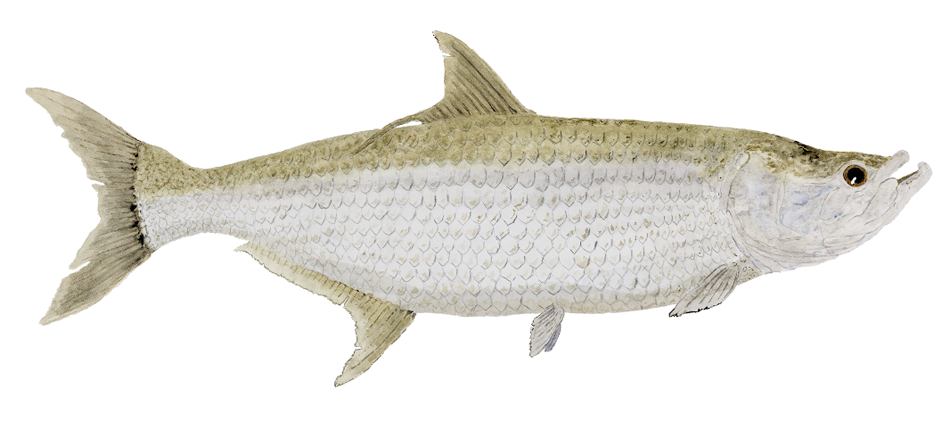
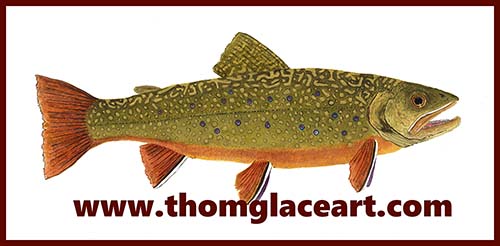
Tarpon [Megalops atlanticus] illustration by Thom Glace.
Does it really matter where rods come from?
A lot of people in the tenkara community will ask where a rod comes from. They might say, “I will only buy a Japanese rod,” but they need to know that not all Japanese rods are produced in Japan. I don’t think Japanese rods are automatically better than rods from an American company. Whether it’s a Japanese company or an American company, when push comes to shove, it’s all about the blank and the specs and the material it’s made of.
Customer service and warranties are also important. Will you be able to get replacement parts if you break your rod? How is the customer service? Can you get support if and when you need it? Those are also important considerations when making a purchase and choosing a tenkara brand.
So what does the future hold for tenkara companies?
This is a tough time to have to answer that question! The current economic climate has led many companies to look again for stateside manufacturing opportunities. I don’t know if that will come to fruition in a widespread kind of way, but it is something that Zen is always exploring, tariffs or no tariffs.
It will take time, but time will tell
 CONTACT Information for Zen Tenkara:
Sponsored