
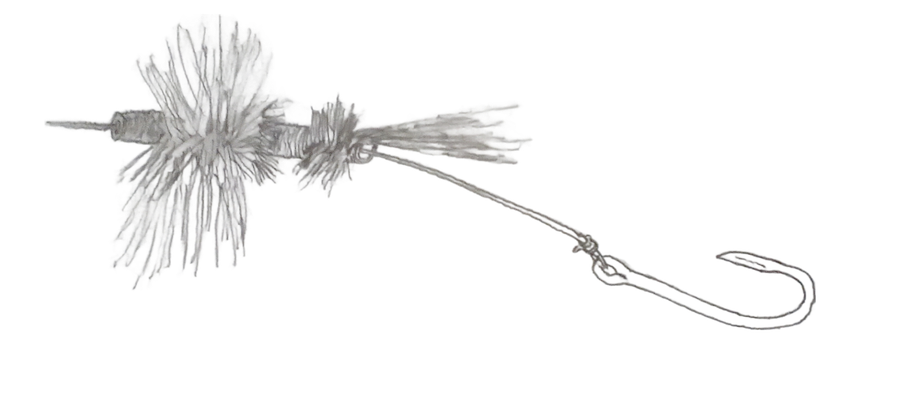
The hook is shown oversized and separated from the fly to emphasize that they are independent components. A tube fly isn’t “better” than a hook-tied fly because fish prefer hollow tubes. Rather, its advantage lies in separating the fly’s profile from the hook’s function. This separation gives the angler more control over hook placement, leverage, dressing durability, sink rate, and compliance with hook regulations—and, in many situations, it converts more takes into landed fish. Sketch by Thom Glace.
The Fundamental Advantage

Henry Clement, Rehoboth Beach, Delaware, August 2023. Photo by Captain Andrew Derr.
By Henry Clement
They excel
The world’s top tiers—Davie McPhail, Casper Hansen, Tim Flagler, Mikael Frödin, Ruben Martin, Ally Gowans, Mikael Andersson, Håkan Norling, Peter Charles, Jim Ferguson, Jay Nicholas, April Vokey, Ed Ward, Jeff Hickman, Martin Votborg, Steve Hudson, Anton Pousar, and others.
They move easily between tube flies and hook flies. If switching required special skills or expensive gear, you’d hear about it. You don’t. A tube adapter for your current vise and a handful of tubes is all you need to start.
The tying skills you already have transfer directly
A tube fly breaks this link
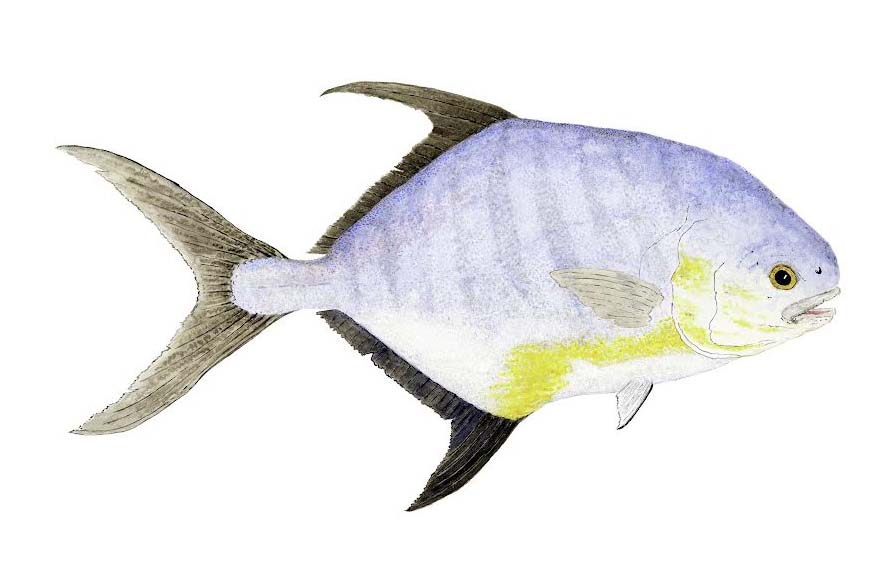
Permit illustration by award-winning watercolorist Thom Glace. Visit his site here . . .
Why Tube Flies Land More Fish
Tube flies don’t create strikes from thin air. Their advantage is conversion and retention: making solid contact when a fish takes, then staying connected through the fight.
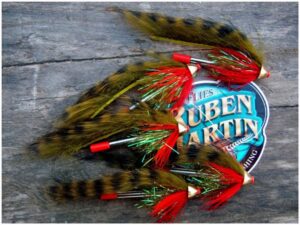
Featured Image by Ruben Martin
For all your fly-tying needs, click here…
Contact Jon Larrabee:
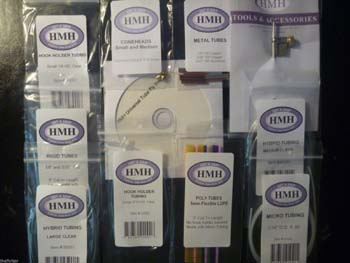
HMH offers a complete tube fly-tying starter kit. The kit includes everything available for tube tying. The kit includes a video, an adaptor tool, and pins for your standard jawed vise. You do not need anything else – just start tying. Tying is “exactly” the same as you’re used to.
- Email
info@hmhvises.com - Phone
207 729-5200 - Fax
info@hmhvises.com - Address
432 Elm St, US Rt 1
Ste H
Biddeford, Maine
04005
Sponsored