
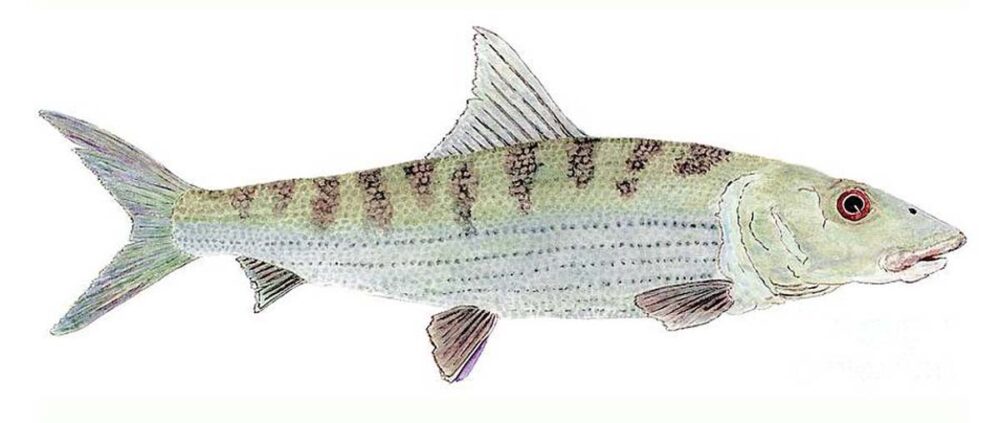
Albula Vulpes. Bonefish illustration by the award-winning artist Thom Glace.
Uh oh, not what we wanted
The word “escutcheon” has several meanings, but its most common context is a shield displaying a coat of arms. This emphasizes the sense of elite status that we often assign ourselves for practicing catch and release. In other words, we might feel justified in doing whatever we want with fish as long as we release the trout, bonefish, salmon, bass, or striper after capturing them.
Recognition and Realities
I watched a fellow angler drag a coho to a rocky shore, where she struggled to remove the hook. While she did this, the 15-pound beauty attempted to escape, but it was positioned on its side, resulting in the fish repeatedly beating itself against the rocky shore while out of water and unable to breathe. The gleeful angler finally retrieved her fly, and the Oncorhynchus kisutch swam off, only to perish a few hours later. But, hey, it was catch and release, right?
 Is the Catch-and-Release Strategy Practical?
While the catch-and-release concept could be beneficial in theory, it has contributed to the decline of juvenile trout, trampling of trout redds during spawning, and exhaustion of bonefish and trout in warmer waters, along with various other fish species. Even worse, it creates a misguided sense of righteousness, akin to intellectual self-deception, as if there is value in destroying historic buildings or a glimmer of hope in believing in autocracy.
Aiding Growth
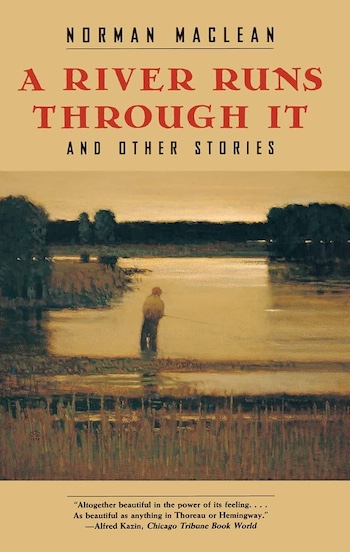
The catch-and-release movement coincided with the rise of fly fishing, largely popularized by Robert Redford’s tribute to Norman MacLean in the 1992 film adaptation of MacLean’s 1976 novella, “A River Runs Through It.” This cinematic interpretation is executed so well that it deserves to be revisited.
Redford adheres closely to the original text, allowing the narrator’s voice to breathe life into the work. Like the book, the film tells a family story about life, its wonders, and catastrophes.
COVID-19
The most recent surge in interest in fly fishing can be traced back to the COVID-19 pandemic. This concept of connecting with nature gained popularity during a time when people had more free time.
Get Active
Rather than wallowing in alcohol, distancing themselves from their children’s educational responsibilities, and blaming others, many resourceful individuals chose to embrace their responsibilities and head outdoors. One popular choice was fly fishing. As a result, with more people occupying the streams, more fish are being caught and released—hopefully with their survival in mind.
However, overuse leads to negative consequences unless it is consensual lovemaking
The catch-and-release ethic is a fundamentally sound principle that has contributed to the growth of fly fishing. Years ago, state fishery agencies began to gradually abandon closed seasons for catch-and-release waters.
What About Stress?
This change meant that there were no provisions to protect fish during periods of thermal stress (when water temperatures become excessively warm, causing fish to expend a dangerous amount of energy when caught and released), no sanctuary waters during spawning periods, and no mechanisms to protect easily accessible and heavily fished rivers from overuse.
Some resolutions by state departments of fish and wildlife have addressed the open-all-year modifications. Contact those States’ fisheries in your window of angling adventures for updates. Again, a full-service fly shop will almost always be a better resource.
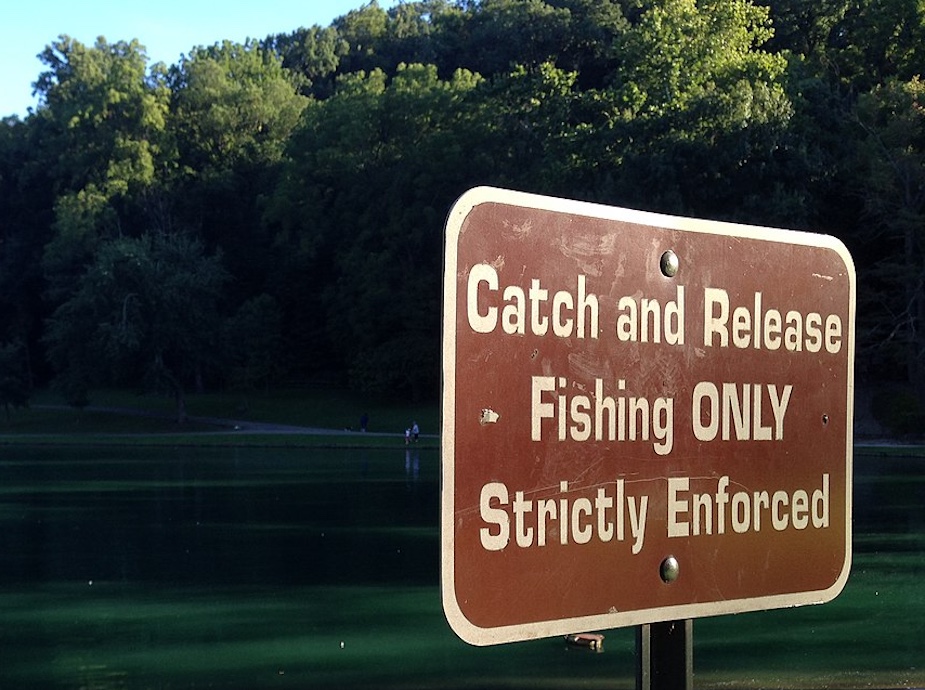
Image Rising Park Lancaster, Ohio, photo by dankeck 23 August 2016.
Today, self-restraint is a work in progress
Perhaps organizations like the IGFA, Trout Unlimited, and other fish conservation groups could follow the example set by the Bonefish and Tarpon Trust, which has consistently reminded anglers about the importance of properly releasing fish.
Take Care of Your Privilege
Be cautious when handling fish for a memory photo—don’t break their jaws. Avoid exhausting them or letting them try to swim against rocks. And try not to take them out of the water—hopefully, you understand the importance of these points.
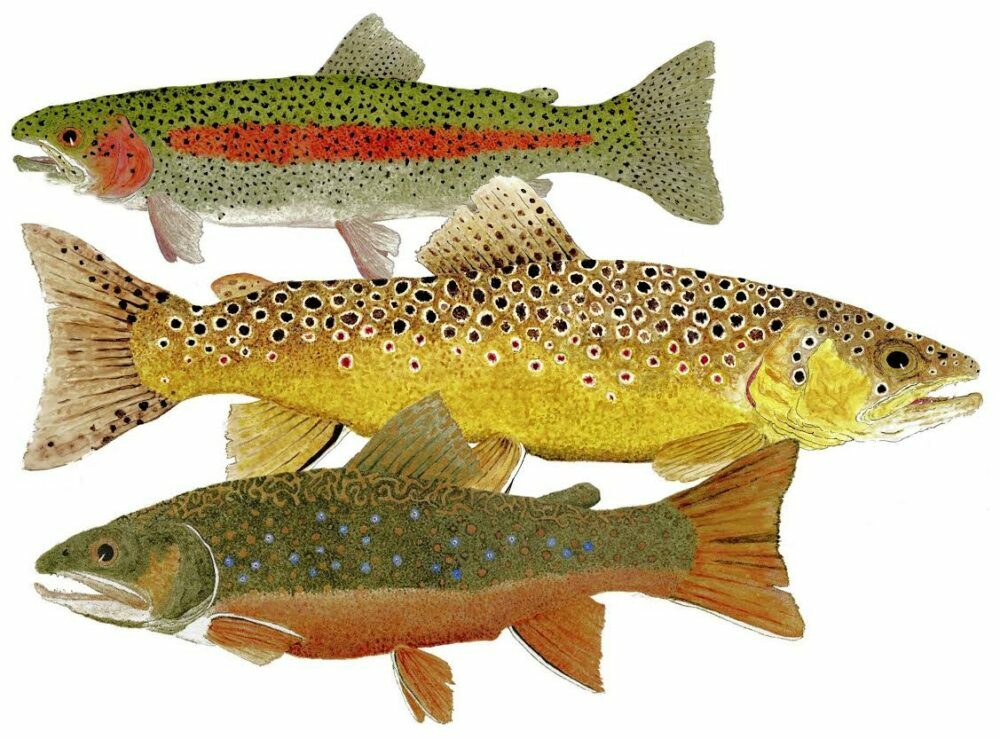
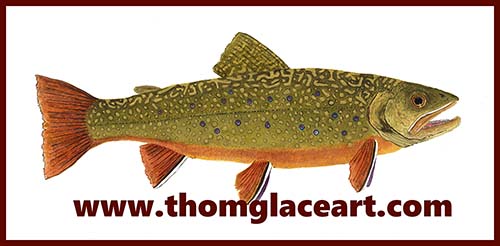
Illustration by Thom Glace – rainbow trout, brown trout, and brook trout. Used with permission.
Sponsored