


Neota Wilderness, Colorado-photo by professional guide David Lobree.
This URL has aimed to inform fly tiers and anglers about the benefits of tube flies over hook-tied flies. With no personal gain or claims to make, I simply want others to try something that is better and certainly easier.

Rehoboth Beach, Delaware August 2023
By Henry Clement
Many people dismiss the idea that tube flies are more effective than hook-tied flies, and perhaps for good reason—it’s difficult to prove. However, it is easy to establish that anglers can carry tube flies in their pants or shirt pockets, a cheap flat plastic container, or separate Ziplock bags. Since hooks are added after the tying process, they can be stored similarly to flies, such as in an Altoid tin or a dedicated container.
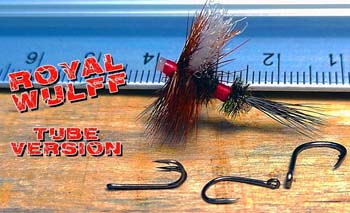
The Royal Wulff is one of the most famous and influential dry flies, which speaks of its enormous versatility and application in the fishing of many species worldwide. Its tube version improves the effectiveness of this great fly. The photo by Ruben Martin/Leandro Longobardi.
Choosing
Choosing a hook-tied fly is a long-term commitment. If the hook becomes dull or bent, or the fly becomes damaged, it becomes worthless.
In contrast, a tube fly is rarely damaged because it is usually detached from its seat in the tube cylinder, allowing it to ride up the leader and avoid harm.
If the hook on a hook-tied fly gets damaged, trying to straighten or sharpen it is often impractical. While it’s possible to sharpen a large stainless hook for sharks successfully, that is an exception mainly for large saltwater game fish. Generally speaking, if a hook-tied fly has a dulled, chemically sharpened hook, it becomes unusable. If a tube fly is damaged, the hook can be replaced in just a few minutes.

Eumer (product name) adapter attaches to your conventional vice for tying tube flies, $20.
Hooks are not cheap
Another less-discussed advantage of tube flies is that they require fewer hooks to be inventoried compared to hook-tied flies. While this might seem like an advantage for hook-tied flies, is it really?
I mainly use straight-eye hooks with a wide gape, which are always chemically sharpened for my tube-tied flies. However, the appropriate hook gape [gap] depends on the size of the fish you’re targeting. It’s generally accepted that wider gape hooks are better for larger fish, while smaller gaps are preferable for delicate presentations and smaller fish.
NOTE: Feature image is Capt. Andrew Derr-Long Island on the fly.
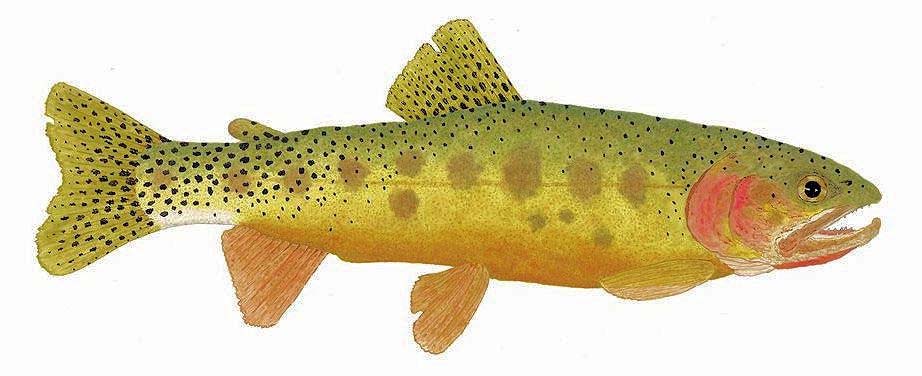
Rio Grande Cutthroat Trout by Thom Glace.
Sponsored