

The insidious nature of glare
By Henry Clement
Polarized lenses can enhance visual acuity, color contrast, and comfort, blocking 100% of harmful UVA and UVB light.

Capt Andrew Derr ~ Costa Del Mar Fantail in Realtree Camo with Blue Mirror 580P Lenses
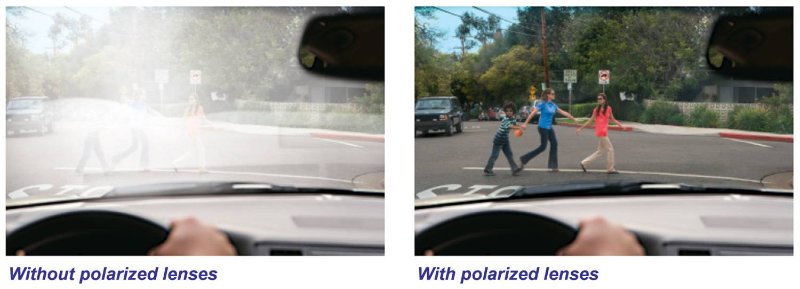
Texting while driving is dangerous, and so is glare. Unlike texting, glare is unavoidable and can affect any driver, regardless of their vehicle. It reflects off the road, car hoods, other vehicles, glass buildings, dashboards, and sand at the beach, particularly off the water’s surface. At its mildest, glare can be annoying, but when the angle of reflection is just right, it can become blinding and even deadly—whether you’re driving a car or piloting a boat.
 What Won’t Help?
Ordinary tinted sunglasses only reduce the amount of ambient light that reaches the eye, which is known as light transmittance. Regular, store-bought tinted sunglasses are unable to block glare. Only polarized lenses can effectively reduce glare. It’s worth noting that there are varying levels of effectiveness among polarized glasses—be cautious of those that are very inexpensive.
How Does Glare Work and How Do Polarizing Lenses Function?
When light reflects off a surface, its light waves travel in multiple directions: some move horizontally, while others travel vertically. Typically, light waves are absorbed and/or reflected randomly. However, when light hits a highly reflective surface, such as water, snow, vehicles, or buildings, at a specific angle, some light becomes “polarized.”
 What does that mean?
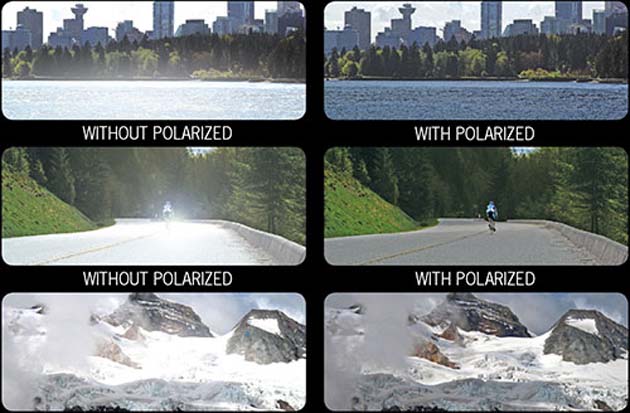
It means that vertical light waves are absorbed while horizontal light waves bounce off the surface. This can cause glare that interferes with your vision by striking your eyes intensely. Only polarized lenses can eliminate this glare. What, then, are polarized lenses? Polarized lenses are laminated with tiny vertical stripes that allow only vertically angled light to enter the wearer’s eyes. They eliminate glare because horizontal light waves cannot pass through the vertical filter. Sunglasses and camera lenses are often polarized to reduce glare from surfaces.
How do polarized lenses work?
When light bounces off a surface, it tends to be strongest in a horizontal, vertical, or diagonal orientation—this is known as polarization. Polarized lenses contain millions of parallel rows of tiny iodine crystals or dichroic dyes, which are so small they cannot be seen with the naked eye. Similar to venetian blinds, the horizontal rows of iodine crystals in the polarized lens block horizontal polarized light waves while allowing only non-polarized vertical light waves to reach the eye. Polarization can block up to 50% of the light passing through a lens.
As a result, the person looking through the lens can still see clearly in most cases, but with reduced brightness and glare. This leads to clearer vision without glare, as only a polarized lens can block it.
Types of Polarized Glasses and Lenses:
Buyer Beware: Lenses can be polarized to varying degrees and in different ways. The cheapest polarized sunglasses typically have only a thin film applied to one side of the lens. Higher-quality polarized lenses have film laminated between two layers of lens material, making them more resistant to scratches and wear. The denser the film, the more effective the polarization.
 Telling the Difference
Generally speaking, polarized sunglasses do not look markedly different from regular sunglasses. While denser films may appear darker, the color of the lens does not determine the level of polarization. For instance, a very dark pair of sunglasses with a light film will not block more glare than a lighter pair with a denser film. Polarized lenses can come in various colors, including gray, brown, and green, each offering advantages in different sunlight conditions.
Different Polarized Lens Options
Polarized lenses are available in a wide range of types, materials, coatings, and designs, including options like polarized varifocal lenses and polarized high-index lenses.
Advantages of Polarized Lenses
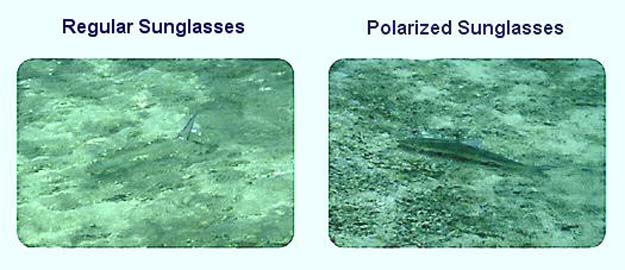
Reducing glare can alleviate eye strain for drivers during long hours on the road. Polarizing filters on camera lenses also allow fishermen better visibility under the water’s surface, helping them spot fish and other objects. Photographers also benefit, as polarizing filters enhance image contrast and enable a wider variety of visual effects. Beyond just blocking blinding glare, polarized lenses improve contrast, visual comfort, and overall acuity.
Limitations of Polarized Lenses
Due to the polarizing stripes that reduce the amount of light entering the eye, these lenses should not be used at night or in situations requiring clear lenses. Additionally, polarized lenses can distort the appearance of liquid crystal displays (LCDs), making specific screens on cell phones, clocks, and other devices difficult to read. For this reason, pilots should avoid using polarized glasses, as they can hinder the visibility of flight instruments and reduce the clarity of other aircraft in the sky.
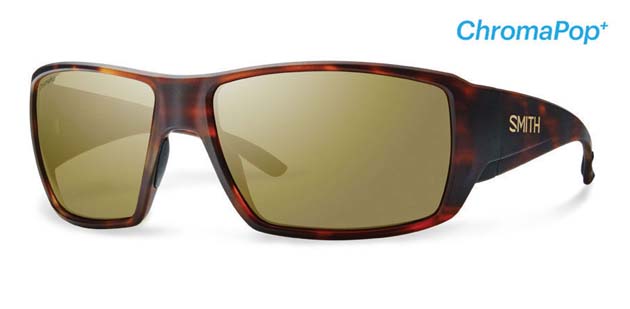
Trending at a dock near you. Smith Optics’ Chroma Pop polarized glasses.
Choosing lens color
Green: Good for general-purpose use, offers even color perception, dims glare while brightening shadows, and provides good contrast for low-light conditions.
Brown/Copper: Good for variable everyday conditions, enhances contrast, and contains a red element to improve depth perception. These are the “go-to” colors for most flats fishermen.
Yellow/Amber: These lenses provide greater clarity in fog, haze, and other low-light conditions and filter out blue light from computer screens and other electronic devices, which can cause eye fatigue and headaches. Low-light flats fishing is a good time to wear these lenses.
Blue/Purple: Trendy and aesthetically pleasing, reduces glare, helps define contours, and enhances color perception.
Gray/Black: This tint is good for general-purpose use, reduces eye fatigue, provides true color perception, minimizes glare, especially off water, and is the darkest with the highest available light reduction. It is popular for bluewater fishing.
Pink/Red improves visual depth, reduces eye strain, provides good road visibility, and offers the greatest amount of contrast.
Green and Gray/Black offer the most field condition benefits, but for sheer simplicity, Amber/Brown works just fine for fishing on sunny and partly cloudy days—conditions most anglers are likely to experience. That includes contrast and depth perception. Both combinations usually come with prescription options. Some colors/tints are not prescription available. Be sure to inquire about that.
Sources: UK Opticians, Opticians Association of America, All About Vision, Frames Direct, past articles from Fly Fisherman, Fly Rod & Reel, Field & Stream, and Outdoor Life.
Featured Image: Capt. Andrew Derr with Costa Del Mar polarized sunglasses.
Some popular polarized glasses resources
Smith Optics, Costa Del Mar, Maui Jim, Oakley, Ray-Ban, Solar Bat, Hobie Polarized
Sponsored