
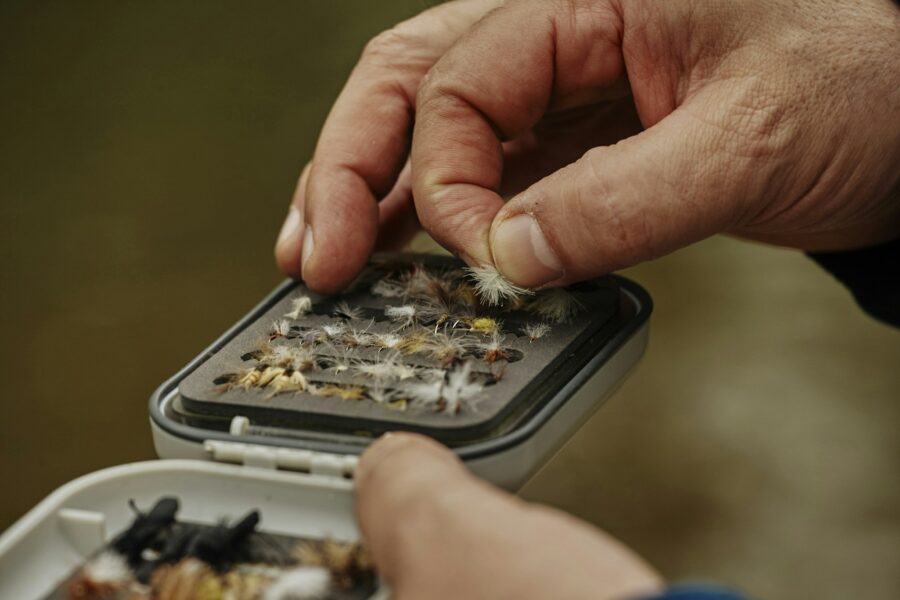

Photo of Trichoptera [Caddis Fly] by Bruce Martin taken on May 27, 2005—a commons image.
Caddis, a restaurant serving caddis for lunch, is always crowded
By Henry Clement
Tied in the size range of #14 to #18, tube-tied or hook-tied, works well—there’s more convenience and stealth as a tube fly.
This caddis fly is a winner if it is fished with cunning. The tying hack, as shown in the Matt O’Neal video below, is significant.
The key to getting an eat with the Quill Wing Caddis is its movement, or lack thereof. Avoiding detection is paramount and can be aided by good casting, a long leader (at least 12 feet), and preventing any wake by not dragging or twitching the fly excessively—or at all.
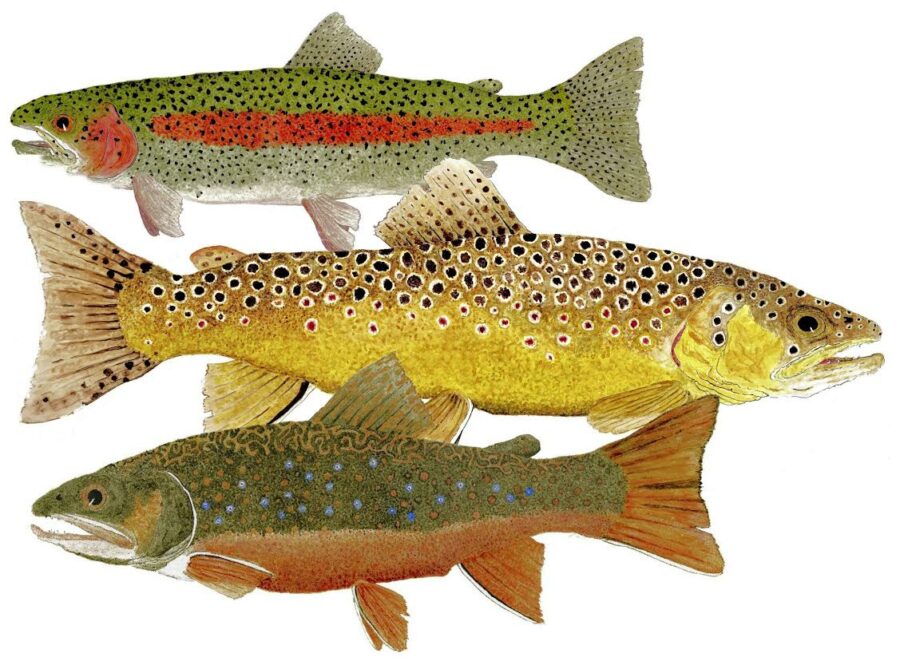
Illustration by Thom Glace – rainbow trout, brown trout, and brook trout. Used with permission.
Avoid carelessly entering the water
- Enter stealthily, or fish kneeling in the grass or on the ground. The key is separation — you from the fly and trout.
- Be prepared to fish the same run several times, but not necessarily the same seams. The idea behind repetitive drifts is getting the trout used to seeing the fly. Of course, you can frighten all the fish with your loud entry into the water, a shitty cast, too short a leader, and the incessant need to twitch and manipulate the fly excessively.
- Fish a caddis with movement by keeping twitches small, subtle, and well-separated from your wading position so the fly looks like a natural. Contrarily, a more aggressive skating or twitching in broken water and riffle tails, even foam that would certainly spook trout in calm water.
Fishing with this fly offers the greatest of pleasures; a take is witnessed
NOTE: Featured Image is Lefty’s Nymphs and Dry Flies.
Enjoy Matt O’Neal’s video
He gives viewers more information than many professional fly tiers do, which supports his selections and educates us. In my opinion, tie it on a tube for the best outcome.
Sponsored