
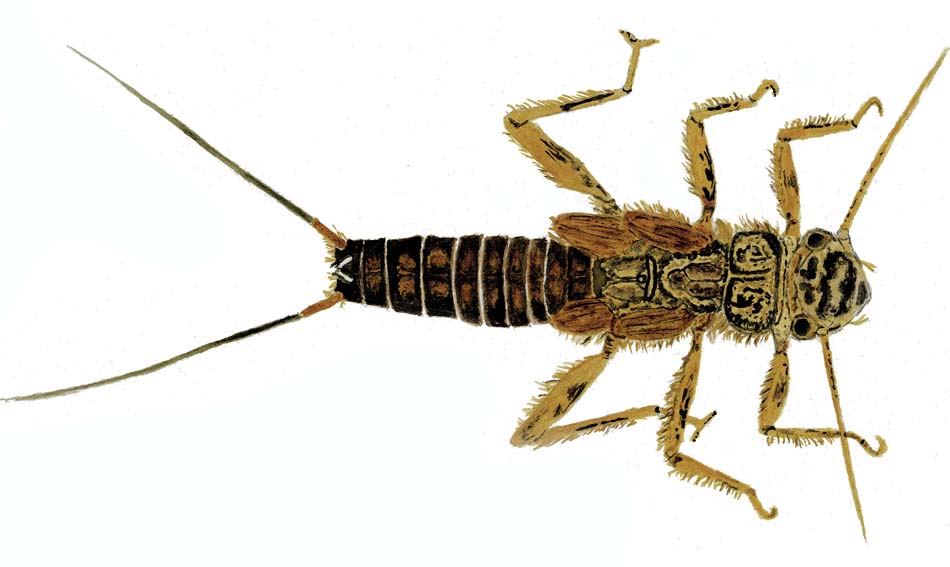
Montana Stonefly – golden stone nymph – Illustration by Thom Glace, used with permission.
The ABCs of Aquatic Insects
By Henry Clement
I could never say I read Paul Weamer’s bug book cover to cover, A Fly Fisher’s Guide to Trout Stream Insects, just because I own it. I cherry-picked his book and did my best to summarize or abridge, if that’s a better way to describe my heist of his brain.
His text is a revelation because, like those with a genius understanding of a single subject, they tend to make complicated uncomplicated, which Weamer accomplishes.
Here we go, trout fishing
Also in the same aquatic invertebrates lane are dragonfly and damselfly nymphs, as well as the crustaceans scuds and sow bugs. Also, in some locations, freshwater shrimp are on the diet.
There are also occasional terrestrials that drop in—such as varieties of frogs or locally important mice, for example, in Alaska when salmon eggs are in the water. However, when comparing all possible food sources globally, the combination of core EPT insects and midges outstrips all others at most locations.

Male March Brown Dun Mayfly Study by Thom Glace. Used with permission.
EPTs:
- Mayflies (Ephemeroptera)
- Stoneflies (Plecoptera)
- Caddisflies (Trichoptera)
Those EPTs provide the bulk of the in-stream insect fuels that trout eat in coldwater rivers and creeks around the world. Midges (Chironomidae) are also a significant food source in tailwaters and lakes, and in winter when waters are nutrient-poor. Midges can produce in the latter conditions, especially if you can think of tiny flies as the best ‘ammo’ for fishing in such environments.
Water temperature
Emergers are most vulnerable to trout attack when water temperatures are in the core “good hatch” and “prime feeding” band, roughly the high 40s to low 60s Fahrenheit, with many classic spring hatches keying in around the low–mid 50s.—Fulling Mill.
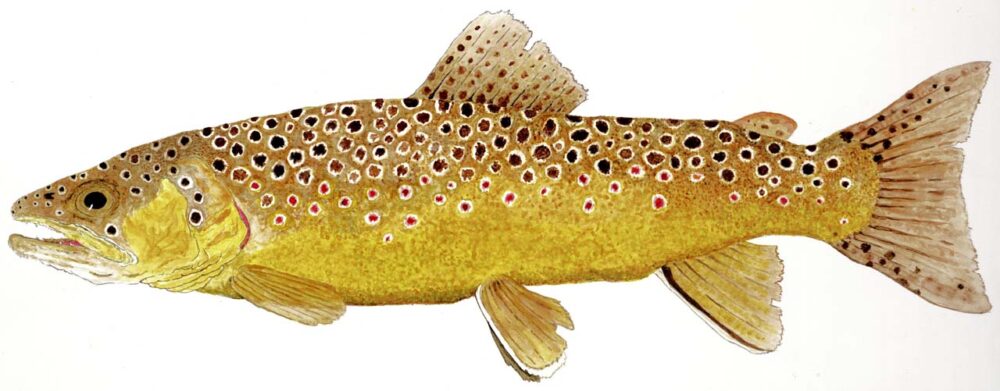
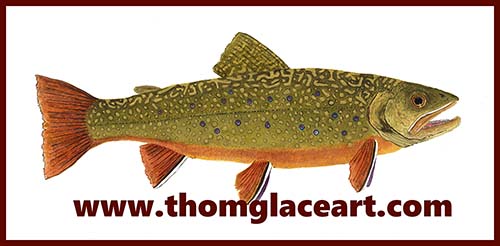
Salmo trutta illustration by award-winning watercolorist Thom Glace. Used with permission.
Sources
TJ Douglas, Hatch, Fulling Mill, Kelly Gallup, Aquatic Insects of Central Virginia, Maine Department of Inland Fisheries and Wildlife, The Orvis Streamside Guide to Trout Foods and Their Imitations, and various others.
NOTE: Featured Image is a Male March Brown Dun Mayfly Study by Thom Glace.
Sponsored