
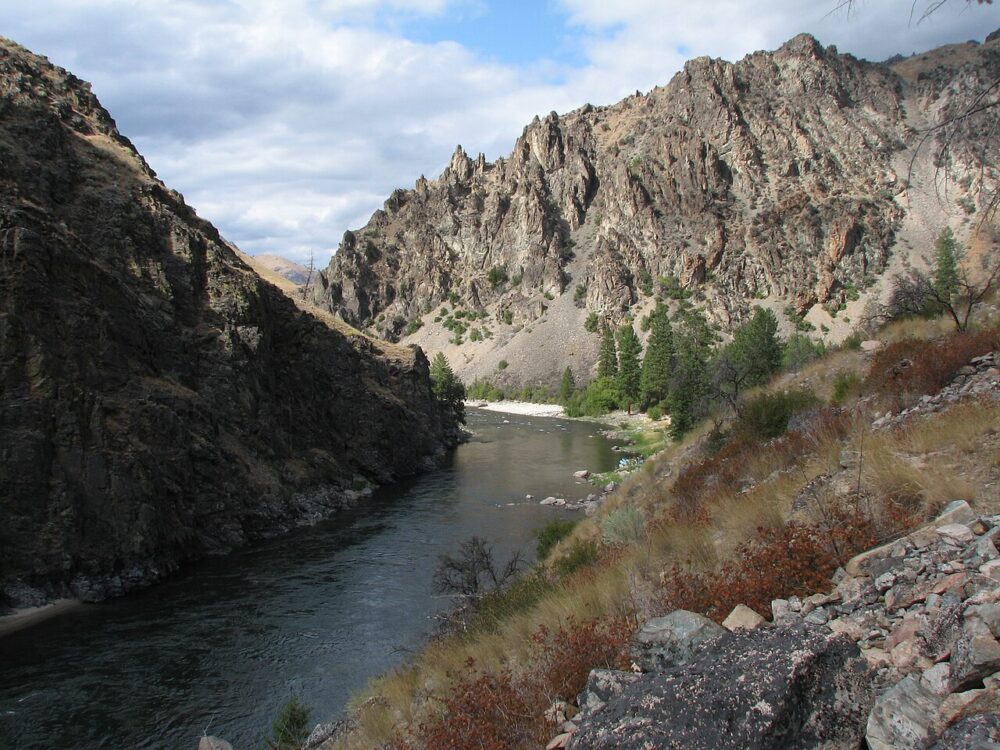
Middle Fork of the Salmon River in the Frank Church River of No Return Wilderness. Forest Service / U.S. Department of Agriculture photo.
The community of dedicated protectors of fisheries, public lands, wetlands, and oceans is strong. As fly-fishers, you are among them—count yourselves

Henry Clement, Rehoboth Beach, Delaware, August 2023.
NOTE: All information posted here was sourced from the links below.
The population of fly fishers in the United States exceeds 8 million active participants, accounting for about 2.6% of the U.S. population. Fly fishing has become the fastest-growing sector in recreational fishing, driven largely by increased participation from women and Generation Z anglers. However, it remains a specialized niche compared to conventional freshwater and saltwater angling.
Nationally reported data highlights several key trends and demographics in the fly fishing community:
- Gender: The community has historically been male-dominated, with male anglers making up roughly 70% to 75% of participants.
- Age: The typical core fly fisher is in their 50s, though the sport has seen a recent surge in popularity among younger, diverse generations seeking outdoor health and wellbeing.
- Income: Avid participants in the sport typically have higher household incomes, averaging around $150,000 annually.
Regional Breakdown
The highest concentration of fly fishing activity is heavily dependent on geography and cold-water access:
- South Atlantic: Boasts the largest share, accounting for over 20% of all U.S. fly fishing participants.
- Middle Atlantic: Accounts for another 17%.
- The West: Despite having smaller absolute populations than the East Coast, states west of the Mississippi River support the highest concentration of cold-water stream and river outings.
Freshwater vs. Saltwater:
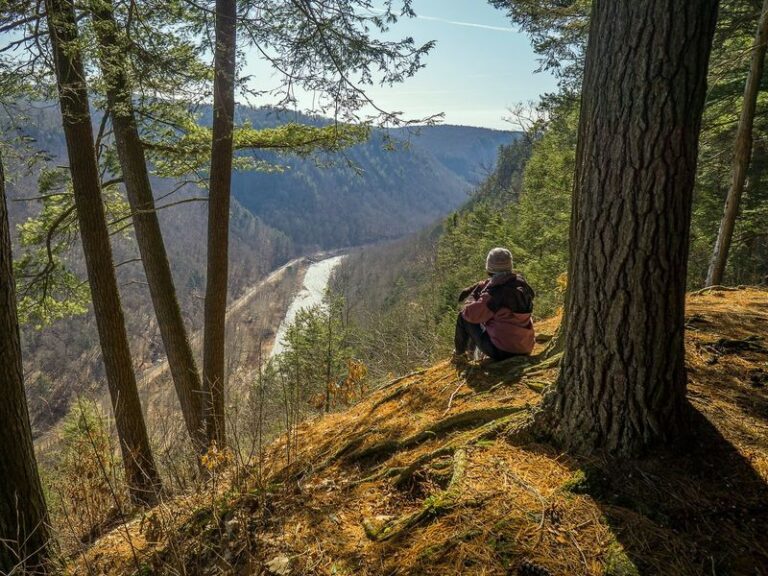
This narrow trail descends steeply to the Canyon floor but does not provide access across Pine Creek to the opposite side of the Gorge. However, many additional miles of trails and trout streams are accessible in the adjacent Tioga State Forest.
Some specifics
The highest concentrations of dedicated fly anglers in diverse environments, the best states, include:
- Colorado: The Centennial State draws around 350,000 fly fishers annually, utilizing over 325 miles of “Gold Medal” waters. Popular year-round hotspots include the South Platte River (Cheesman Canyon) and the Taylor River.
- Pennsylvania: The largest collective population of fly anglers, supported by over 15,000 miles of designated trout fisheries.
- Montana: Known as the “culture core” of fly fishing, Bozeman and Missoula host the highest densities of enthusiasts in the country. Prime waters include the Madison, Yellowstone, and Missouri rivers.
- Florida: Hands down, the top destination for saltwater fly fishing. Anglers target tarpon, bonefish, permit, and snook in the Everglades and the Florida Keys.
- Michigan: The hub of Midwest fly fishing, celebrated for legendary Hex hatches, steelhead, and rich angling history.
- Alaska: Renowned for wilderness fly fishing and massive salmon and trout runs.
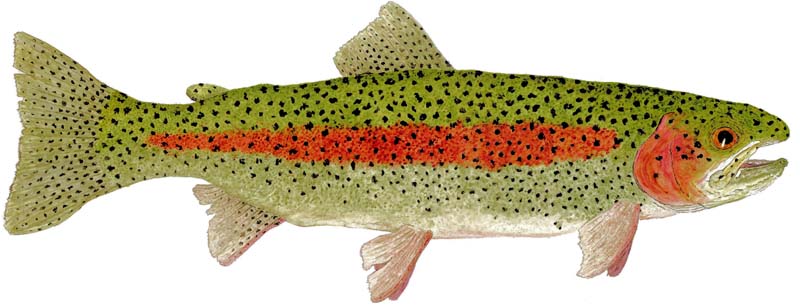
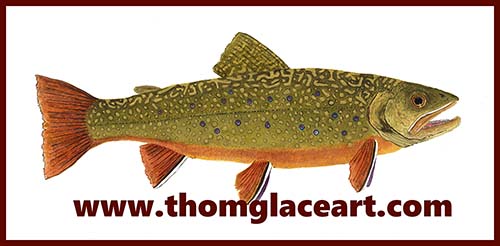
Thom Glace’s Breeches, Pennsylvania, Rainbow [Oncorhynchus mykiss] study. Visit the award-winning watercolorist’s website.
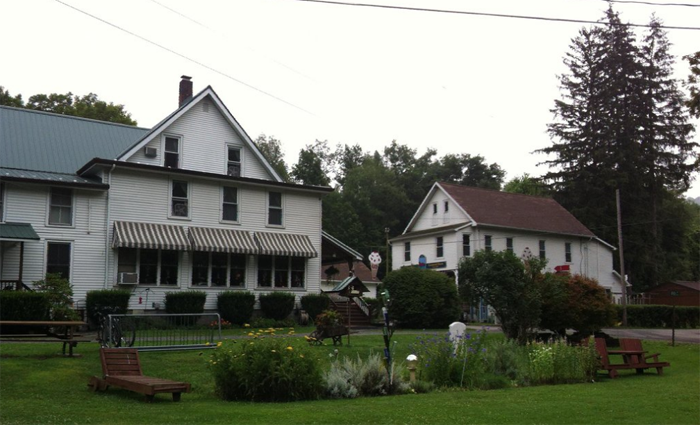
Featured Image: Cedar Run Inn in Pennsylvania, Lycoming County, from the riverside (behind the photographer) and General Store across the street.
SOURCES:
National Marine Manufacturers Association
Enjoy a Trout Fly Fishing States video:
Sponsored