

Donald Trump – Photo credit Gage Skidmore – a commons image.
MAGA Remains Disconnected From Scientific Reality; A Scary Lot is in Charge of the US
Imagine standing knee-deep in a favorite trout stream, only to find the water unseasonably warm in the heart of winter. In May 2026, the United States experienced a startling mix of extreme weather: temperatures soared above 100°F in parts of California and the Southwest, even though it was still technically winter. Meanwhile, the upper Midwest was buried in blizzards, and severe thunderstorms swept east from Arkansas to the Gulf Coast. Across the globe, record-breaking weather events are becoming the new normal, raising alarms among scientists who warn that critical ecosystems are under increasing stress.
Despite repeated warnings from leading global scientific institutions and Nobel laureates, the current U.S. government remains disconnected from scientific reality. By doubling down on coal and other fossil fuels while ignoring proven alternative energy options, it continues to accelerate planetary overheating.
What does NOAA (National Oceanic and Atmospheric Administration) say about these changes? Rather than making sweeping statements about all salmonids, NOAA typically focuses on the impacts to specific species or populations. For example, NOAA reports that West Coast salmon and steelhead are particularly vulnerable to climate change, with certain groups of Chinook, coho, and sockeye among those most at risk. According to NOAA, climate change degrades cold-water habitats, alters stream temperatures and flows, and increases the risk of extinction for sensitive runs. Salmonid groups—including salmon, trout, and char—face the greatest threats at the southern limits of their ranges, especially in California, Oregon, Washington, and Japan. — National Oceanic and Atmospheric Administration [NOAA].
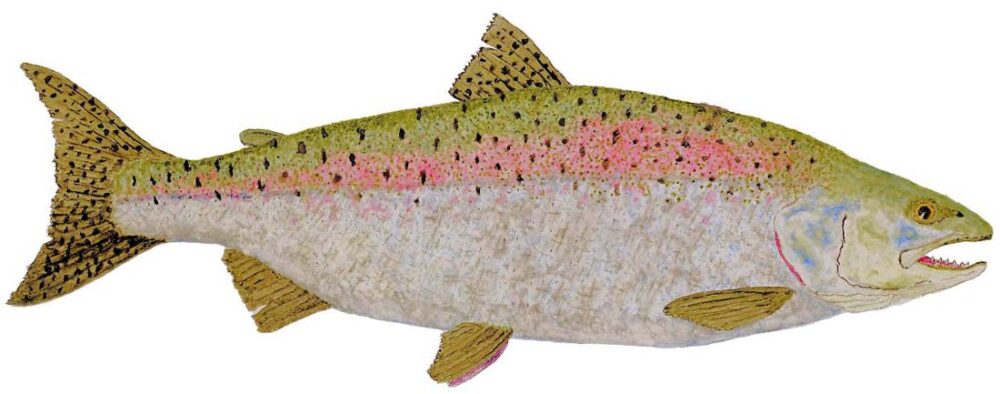
Fresh from the sea, the colors of the Chinook salmon [Oncorhynchus tshawytscha], the largest of the Pacific salmon. Study by Thom Glace, award-winning watercolorist, fly fisher, and conservationist.
Top Vulnerable Regions and Species:
- Southern Pacific North America: California’s Central Valley Chinook, southern Oregon Coho, and the Columbia River Basin spring-run Chinook are all struggling due to reduced snowpack, high stream temperatures, and low flows.
- Atlantic North America: The Gulf of Maine’s Atlantic salmon population is now endangered, with the last remaining groups limited to Maine.
- Southern Europe: Atlantic salmon in northern Spain and northern Europe are at the edge of their range, battered by habitat destruction, dams, and reduced river connectivity.
- Japan: Salmon populations are in severe decline, largely due to high human density and related habitat pressures.
Main Threats to Salmonids:
Climate Change:
Rising water temperatures, disappearing snowpack, and shifting ocean conditions.
Habitat Loss and Degradation:
- Urbanization and land use changes destroy or fragment critical spawning sites.
- Migration Barriers: Dams and other obstacles block traditional migration routes.
- Pathogens and Competition: Even relatively resilient northern populations face growing risks from disease and invasive species.
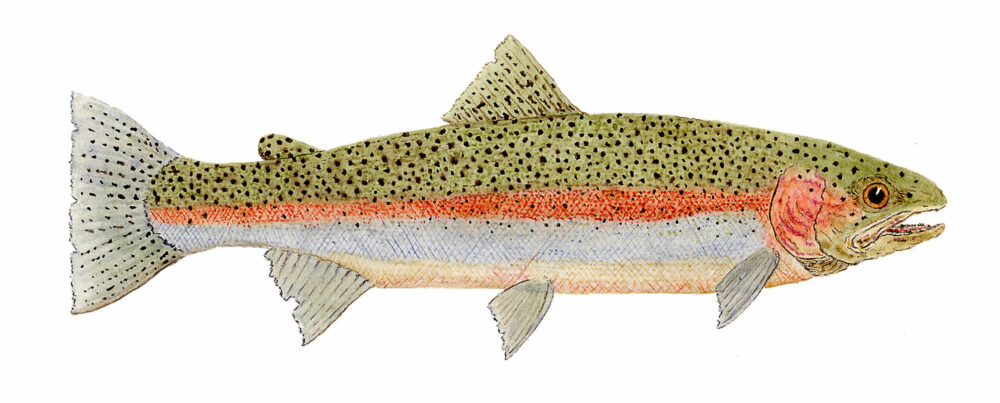
Adult Steelhead Trout [Oncorhynchus mykiss] by Thom Glace. Used with permission.
Key Reasons for High-Temperature Fish Kills:
Oxygen Depletion (Suffocation):
As water temperature rises, its capacity to hold dissolved oxygen drops. Simultaneously, fish are cold-blooded, and their metabolism increases in warmer water, requiring more oxygen. This creates a lethal imbalance in which fish need more oxygen, even as less is available.
- Metabolic Overload and Stress: Extreme temperatures near the upper limit of a fish’s tolerance can cause severe physiological stress, leading to death. Their organs struggle to function properly under high heat.
- Reduced Resistance to Disease: Warmer water promotes the growth of pathogens like bacteria, fungi, and parasites while weakening the fish’s immune system, making them more vulnerable to infection.
- Decreased Food Intake and Reproduction: High temperatures can reduce fish’s appetite, affecting their survival. It also disrupts reproductive processes.
- Thermal Shock: Rapid, extreme changes in water temperature can kill fish instantly, often occurring when they move between warm and cold layers or during sudden weather shifts. —University of Miami – Rosenstiel School
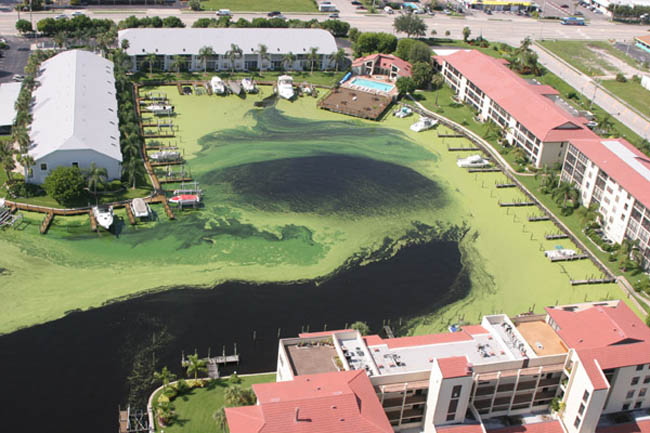
Featured Image: Nutrient pollution in a marina on the Caloosahatchee River near Cape Coral, 2005 – John Cassani, a commons image.
Cauldron waters video . . .
As the world warms and watersheds change, the future of fly fishing—and the survival of iconic cold-water species—hangs in the balance
Sponsored