

Admittedly, not a good fly tier—just good enough with basic patterns to be rewarded more often than not. I think of tying flies as work, so I take pride in making sure it swims without rolling or spinning, is weighted to match the rod, line, and leader, and doesn’t negatively affect casting.

Henry Clement, Rehoboth Beach, Delaware, August 2023.
By Henry Clement
I take advantage of tube flies’ obvious benefits versus hook-tied flies
NOTE: I do not tie tube flies in sizes #14 or beyond. Not because those smaller sizes cannot be tied on a tube, but because I’m not good enough to tie them on a hook either. And the smaller size nymphs and larval stage sizes in the 20s, hook-tied, are just as potent, in my opinion, as tube-tied. I buy those smaller fly needs from a private tier, my niece. Being addicted to YouTube’s endless supply of fly-tying videos creates a lot of screen time. Some of that time is wasted on a lot of videos I watch or partially watch that aren’t good.
The latter type of videos tend to be a guy trying to look authoritative, speaking buddy-buddy language, and has a noticeable odor of bullshit. Also, they tend to go off-topic too much or have video systems invented in the plasticene age. Many of these tiers believe the Woolly Bugger deserves a new name like Ed’s Skid Marked Knickers Fly. It’s a bugger, alright, but in drag, having more tinsel than the Capital Christmas Tree, and so heavy it would need gunpowder to cast.
What makes a fly worthless?
Overdressing a fly in fly tying means adding excessive materials like legs, tails, hackle, or wings, which can make the pattern bulky and less effective for attracting fish. This often happens when tyers aim to imitate natural insects but overestimate proportions, resulting in flies that don’t sit properly in the water or mimic sparse real prey accurately. A perfect example of overdressing a fly would be the Woolly Bugger. Adding gobs of tinsel, legs, wings, antennae, and eyes has not advantaged anything. Hinder might be a better way of calling out some of those excesses.
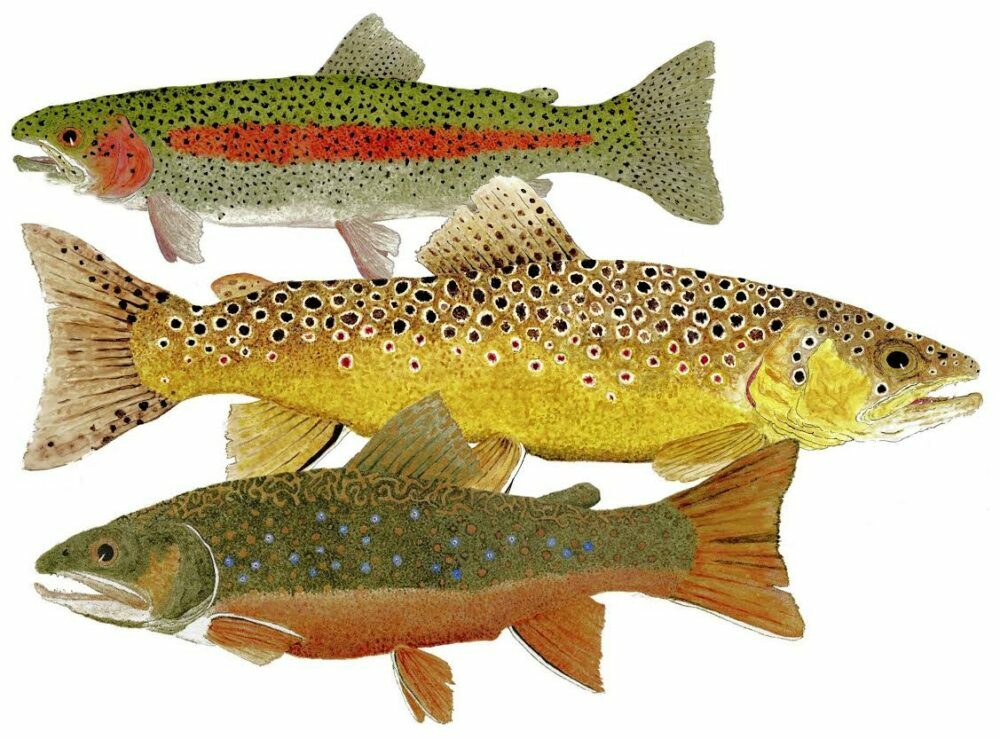
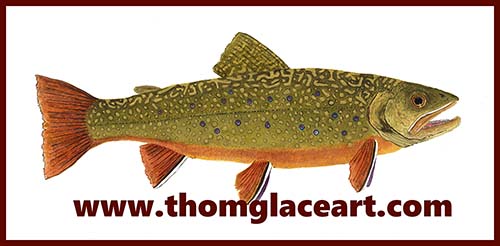
Illustration by Thom Glace – rainbow trout, brown trout, and brook trout. Used with permission.
Why does it usually reduce success?
Fish, especially trout, selectively ignore overdressed flies, in my opinion, because they prioritize slim, subtle profiles that match actual nymphs, emergers, or duns. Bulky dressings create unnatural drag, poor flotation, or visibility that spooks fish rather than enticing strikes.
A perfect example, Capt. Andrew Derr’s hook tied Sand Eel. It is sparse. Another is the Woolly Bugger, hook- or tube-tied, as originally tied by Richard Blessing—three materials. See the only replica found as tied by Cheech @ Fly Fish Food.
Fixes and Tips
- Tie sparsely to match natural insect sizes. You can trim up hook—tied flies while fishing. This is always a good idea, having caught a fish. There are usually slim, ragged fibers—trim to ensure they don’t ride too high (skating).
- A tube fly will have been released out of harm’s way, trimming rarely called for.
- Prioritize “less is more” for tiny imitations, trimming rubber legs or hackle for conditions.
NOTE: Featured image Steve Hudson teaching fly tying at a Georgia Fly Shop.
Cheech at Fly Fish Food
Cheech keeps it simple with his take on Russell Blessing’s original Woolly Bugger, tied in the late 1960s in Pennsylvania.
Sponsored