
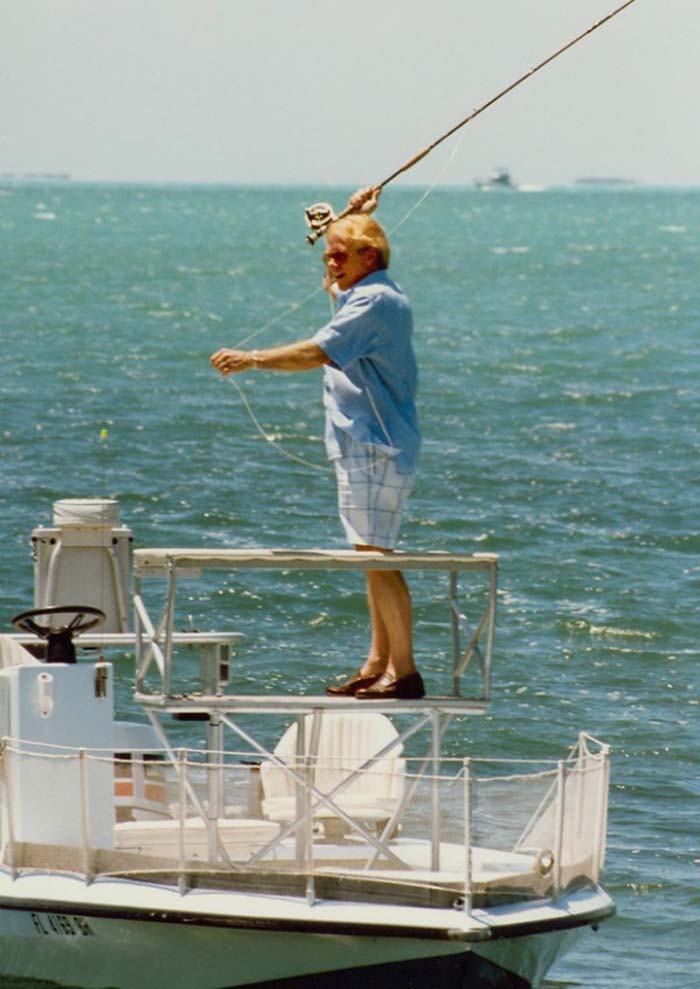
The original tarpon-on-a-fly guy, Florida Keys’ Billy Pate, working his magic. Fly Lines start to evolve as the significant other. Note the casting platform arrangement he had built. The precursor to today’s casting platform. Photo courtesy of Don Reed.
Fly lines are the drivers, not the passengers

Henry Clement, Rehoboth Beach, Delaware, August 2023.
By Henry Clement
Remarkably, fly line manufacturers began to acknowledge informally that their products dramatically affect fly casting about a decade ago.
It was Kelly Galloup, a recognized expert in freshwater fly fishing, who made the most notable statement: fly lines are the driver, not the passenger, when casting.
Previously, the focus was all on fly rods. The YouTube video, “The Complete Guide to Fly Casting Sinking Lines,” was published by Brian Fleshsig (Mad River Outfitters) on January 13, 2022. In that video, Galloup stated that it is the fly line, not the fly rod, that drives casting.
Previous Video
In October 2021, Kelly Galloup released “Let’s Talk Sinking Fly Lines.” The video emphasizes fly line design for better loading, shooting, and precision casting.
It’s also worth noting that after the Galloup/Brian Fleshsig video, RiverBum highlighted that fly lines — not rods — dictate casting efficiency, with premium tapers and coatings making rods easier to load, even for beginners.
Still, even in 2026, many anglers believe that a $1,000 rod casts better than a quality $300 combo kit from Orvis, Echo, or Redington, which includes high-end fly lines. However, their choices often give anyone a better chance to enjoy fly fishing rather than turning it into a tiring chore.
Fly line color – does it mean more than visibility?
Yes, but it is a general indicator, and reading the label remains the best way to tell whether a line is floating or sinking. For example, fly line color often indicates its density (floating vs. sinking). Typically, lighter colors (white, yellow, orange) signify floating lines, while darker colors (dark green, brown, black) indicate sinking lines.
Don’t shy away from premium fly lines
Top-tier fly lines feature better tapers, slicker coatings, and more stable cores, resulting in tighter loops, less friction in the guides, and smoother mending and shooting lines for much longer.
Remember, in fly fishing, the line’s mass (not the fly) loads the rod and carries the fly to the target. If the line is mismatched to the rod and distance, the rod won’t load properly, and casting becomes frustrating rather than enjoyable.
Note: Fly lines labeled “6-weight” can vary significantly in actual grains, so two “6-weights” might cast completely differently on the same rod. This variation can be costly. Buying from a fly shop can help you avoid this mistake.
Note 2: Matching line choice to fly size, wind conditions, and typical fishing distance (not just the rod’s number) often results in instant enhancements in loop control, accuracy, and presentations.
Note 3: Many modern “all-purpose” lines are already half to a full size weighty in the head, effectively overlining fast rods to make them appear more manageable at normal fishing distances.
Note 4: If you only have 15–20 feet of line out, the effective grains are lower (closer to a 6‑weight on an 8‑weight rod), so many anglers will overline by half to a full size to help load the rod at short range.
Note 5: Conversely, a skilled caster handling a lot of line in the air can reduce a line size because the longer head outside the tip adds enough overall mass to keep the rod loaded, which is not recommended for most.
Although outdated, the AFTMA standards specify a target grain weight for the first 30 feet of line (for example, an 8‑weight is around 210 grains, plus or minus 10), which is the load rod designers typically build around.
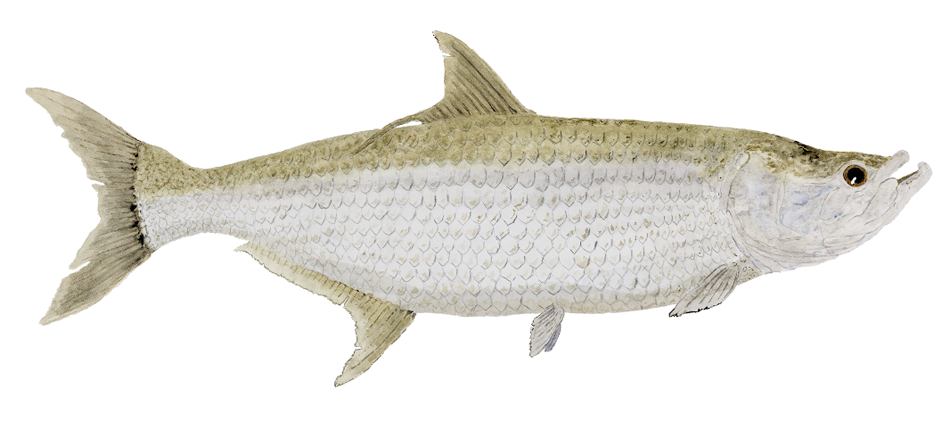
Tarpon [Megalops atlanticus] illustration by Thom Glace.
Summary:
When fly fishing, always invest in the highest quality fly lines you can afford, regardless of your budget. Opt for a floating line and supplement it with interchangeable sink tips for versatility without having to purchase additional, expensive sinking lines.
Featured Image by Thom Glace / Three Amigoes
Video by Simon Gawesworth / RIO Products
Sponsored