

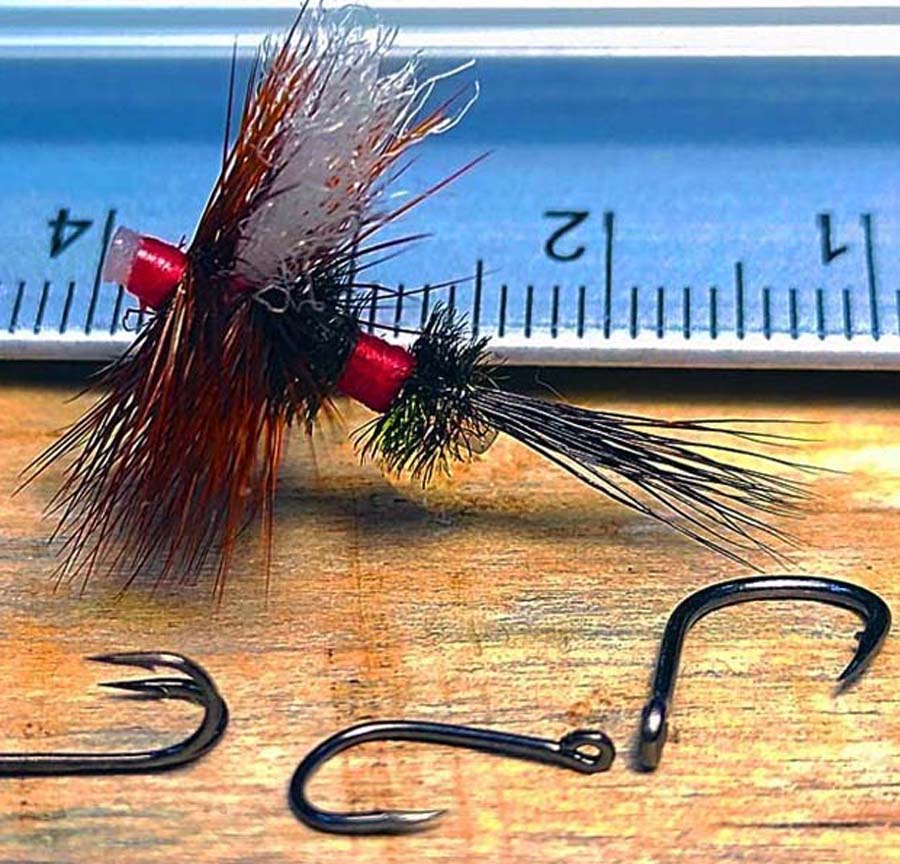
Ruben Martin is known worldwide for his tying skills, pattern modifications, and innovations. Pictured is Ruben Martin’s Tube Humpy. Here is his website.
Modifications that claim to establish a “new” fly pattern are common

Henry Clement, Rehoboth Beach, Delaware, August 2023.
By Henry Clement
Not referencing the original fly patterns as inspiration is sometimes fueled by boastful bravado. While many changes are trivial, some variations—though related—possess distinct features that make them significant for anglers in specific waters. Patterns once seen as good anywhere often evolve into tailored flies for local game fish.
Tweaks worth believing
Most of us tweak flies for personal preferences, experimenting with materials, sizes, colors, and hooks to make them our own fathering. Rather than dismissing these efforts, we should celebrate anglers who adapt patterns to catch “Mo Betta” by drawing on their time-tested local experience and knowledge.
For example
Bonefish flies in Grand Bahama differ from those in Eleuthera in color, hook choice, and size, reflecting critical lessons learned from local successes and failures. On Eastern Long Island, New York, local and popular inshore and offshore guide Captain Andrew Derr‘s Sand Eel may differ only slightly from his client-tied Sand Eel pattern. His switching the client’s pattern for his own increases the chance of success more than his client’s does. The changeout is not an insult. Derr’s is a proven upgrade that took years of trial and error to perfect.
Major divergence points, like tube flies, showcase the larger innovation
Although shunned by most North American tiers, they passively deny millions of anglers the advantages they offer. Here again, classic patterns can be tweaked, but unlike the related hook-tied versions, tube flies are not limited to specific hook sizes and are easier to cast because of significant weight savings.

Pheasant Tail Flash Back Nymph by Mike Cline Mike Cline–Lt. Col. Retired from the US Air Force. A common image.
Advantages
Modifying traditional flies to match regional species—through tweaks in color, size, and movement—is a highly effective way to improve catch rates without reinventing your fly box. Classic flies already feature proven triggers, such as profile and motion. Regional adjustments enhance them by tailoring color, size, and action to match local hatches, forage, and fish behavior.
New dressing

Vokey photo.
Alterations in size and silhouette can replicate local insects, while colors can shift to echo natural forage tones. Movement is enhanced with softer, more lifelike materials to better mimic prey. Tailoring patterns for local food sources—whether for trout, bass, tarpon, bonefish, or panfish—can dramatically increase your success on the water. Experienced tiers benefit from quick-tying, regionally tuned flies and maintaining a reference of local aquatic bugs, mollusks, shrimp, and baitfish to further refine patterns.
Modify for success, but time-tested beyond the tying desk will win the day
Ultimately, regional modifications turn your tying bench into a personal research lab, allowing you to create custom versions of classic flies. Famous saltwater patterns—primarily fly-fishing lures—such as the Clouser Minnow, Lefty’s Deceiver, Crazy Charlie, and freshwater standards like the Woolly Bugger and Parachute Adams, can all be adapted to perfectly suit your local waters.
To the right, April Vokey assists a fellow tyer at a fly-tying symposium, exemplifying her generosity and expertise. As a modern-day superstar of fly tying, she has made significant waves in the steelhead community as both an accomplished fly fisher and a leading innovator in tube fly design.
Sponsored