
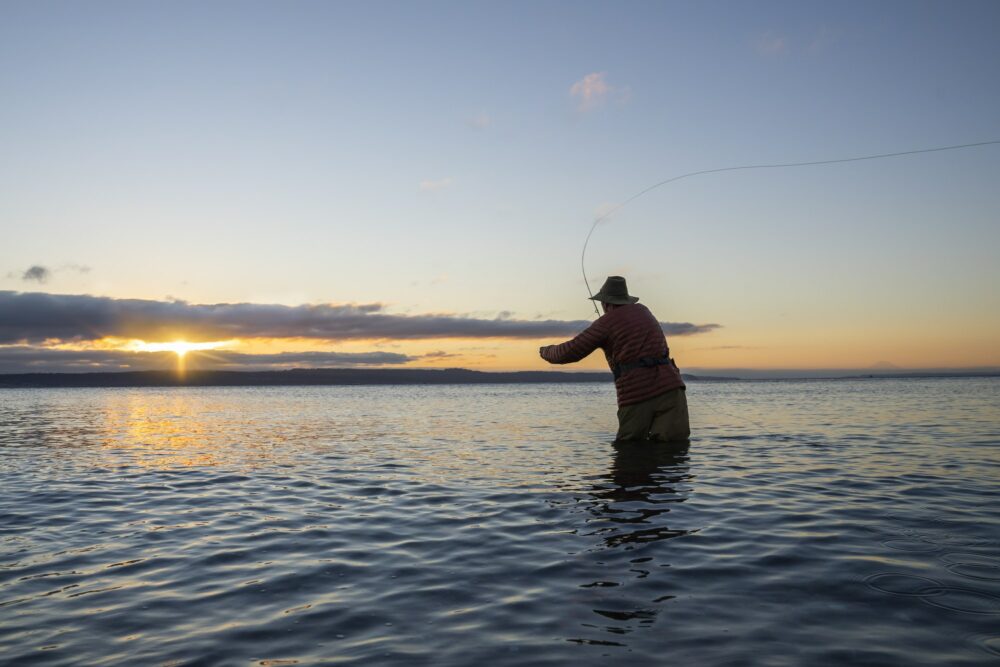

Photo by Lisa Gleason (BLM) Bureau of Land Management.
Fly line maintenance, a clean line is the fly caster’s delight
By Henry Clement
One of Dmitri’s obsessions became a polite, pointed rebuke
My inattentiveness to fly line care had cost me years of underperforming casts.
SIDEBAR: “No client ever complained about the cost of replacements or failed to tip the staff for cleaning and replacing, except for the so-called Russian dignitaries, who never tipped and often stole anything they could get away with.”
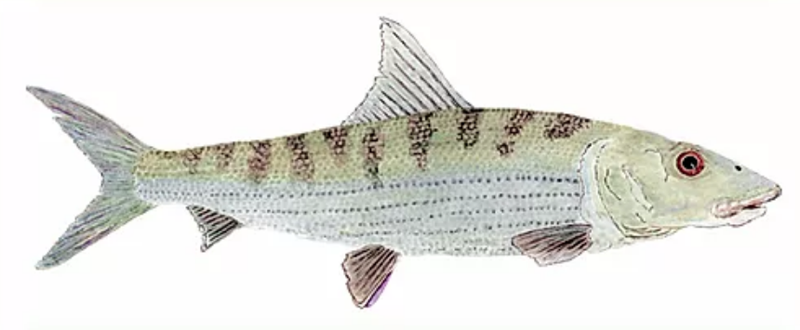
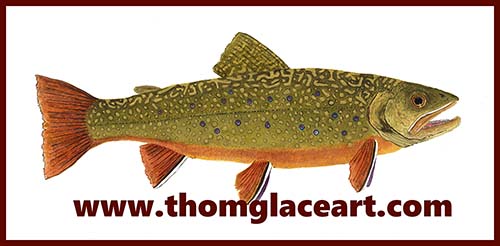
Illustration of Albula vulpes by Thom Glace. Angie Roth caught several bonefish from Grand Bahama [East End] weighing between 4- and 7-pounds over the course of five days before Dorian [September 1, 2019, Category 5 hurricane]. Her flies were all tied on tubes, imitating shrimp and crabs in various sizes, color combinations, and using different hook sizes. Angie said that small, dark rust-colored shrimp patterns with embedded #12 and #14 hooks worked best.
“Sometimes a reel was so poorly maintained that it was beyond repair. In such cases, we provided loaners”
I did not doubt Dmitri’s account, so this fall (2025), I searched online with AI but got sidetracked and ended up on an old Orvis site. It might have been a compilation of posts, which is likely. Nonetheless, it was authored by Phil Monahan, a former employee and the company’s most candid and knowledgeable spokesperson, who is now missed after a short stint as editor at MidCurrent, the leading angling site.
It was a collection of thoughts on what aspects of fly-fishing are significant but often overlooked for their impact on performance—mainly equipment and self-improvement. Notably, fly line maintenance and practicing casting ranked as the top deficiencies.
What struck me most was that Monahan’s contributors were all guides with extensive experience. Practicing casting was, as mentioned, the most common recommendation. A plea to anglers of all skill levels: practice. The advice is similar across sports—you can’t become a good golfer without practicing.
Another common issue was “What’s on your line?”
When I trained at the Fly Shop of Miami and then worked at the Fly Shop of Fort Lauderdale, I learned to mark a new fly line with a Sharpie immediately after the front loop. A bold stripe equals five, a narrow stripe equals one. Two single stripes and a bold stripe would, therefore, indicate a 7-weight line.
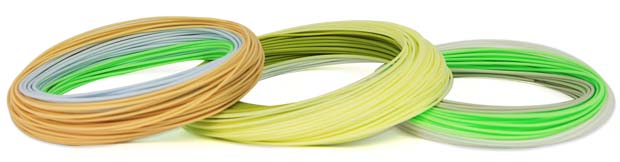
The three different SharkWave fly lines. A Scientific Anglers image.
The color of your fly line
Color-coding on fly lines generally indicates buoyancy—floating, intermediate sink, or fast sink—based on manufacturing standards. Lighter colors usually indicate slower or no sinking, while darker shades indicate faster sinking. This helps anglers quickly identify lines in storage or on the water. Check with the line makers’ color code for floating, intermediate, etcetera.
Remember the IPS (inches per second) rating for sinking lines; that’s straightforward. It shouldn’t be hard for anyone. Today, it’s common to add sink tips to floating lines.
How to clean fly lines:
Saltwater anglers need to perform more thorough fly-line cleaning than freshwater anglers. Salt accumulates quickly. Saltwater lines develop corrosive salt deposits that embed in the coating, causing stiffness and reducing flotation over time. Freshwater lines collect softer debris, such as dirt, algae, and tannins, which dull the line but cause minimal structural damage. Both are affected by UV sun exposure, but salt speeds up deterioration—Scientific Anglers.
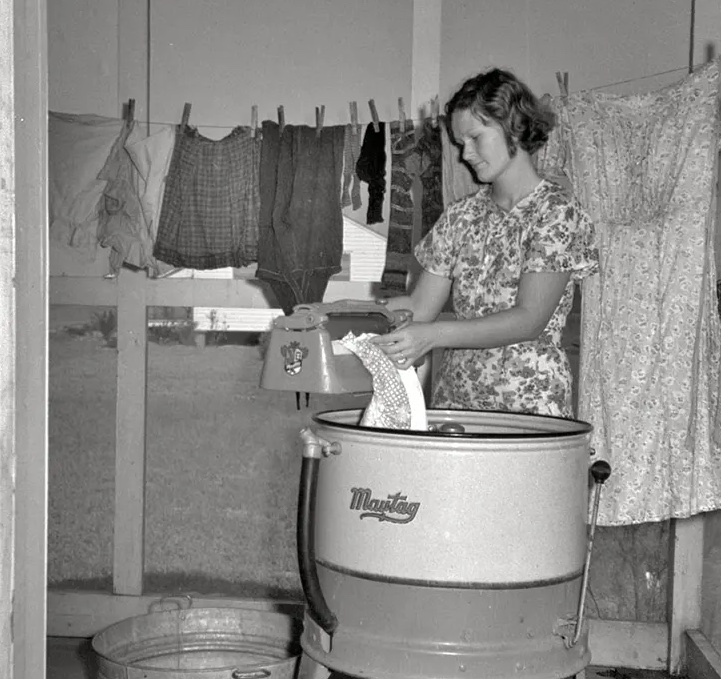
Cleaning her fly lines is next. Image of September 1938. “Farm wife washing clothes. Lake Dick Project, Arkansas.” A Wikipedia common image.
Rinse saltwater lines after each trip, especially in warm climates where saltwater can cause stiffness. Clean freshwater lines after 10-20 uses or if the line starts to conform to memory. Use products like Scientific Anglers Fly Line Cleaner for both, and avoid hot water or harsh chemicals that can damage coatings—Cortland Line Company.
NOTE: Check other brands, such as RIO Products, for similar guidance.
Watch video: How To CLEAN Your FLY LINE by pro Brian Flechsig, owner of Mad River Outfitters
Sponsored