

 UV Glue Cure
By Henry Clement
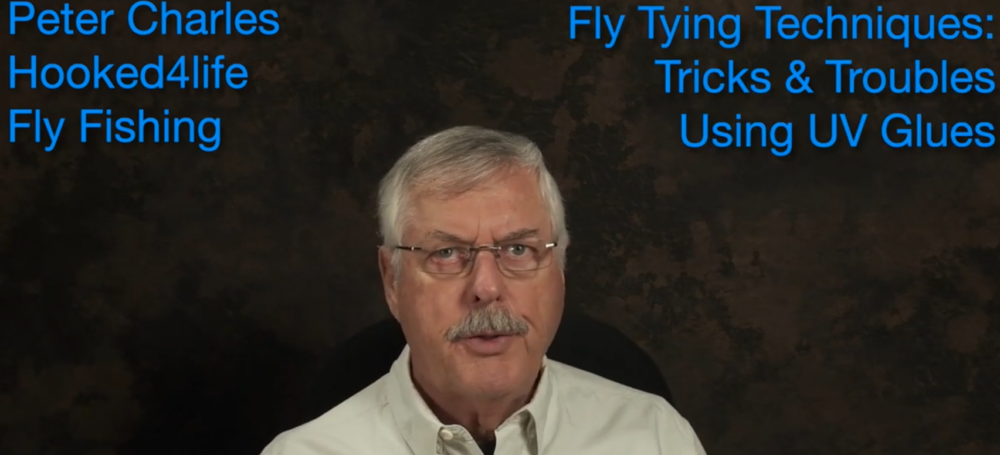
Peter Charles, known for his YouTube channel hookedforlifeca and his expertise in fly fishing, has solved many fly-tying issues, including this particular sticky problem.
His solution ensures that even if UV glue doesn’t fully cure on the surface, the fly remains preserved as intended — by wrapping uncured UV material in a fully cured, protective layer that maintains its appearance indefinitely.
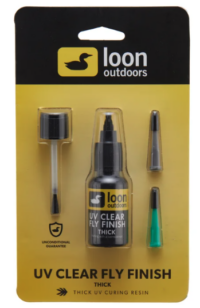
Loon is a premier fly-tying UV resin producer. They make several different viscosity grades and container types. The resin shown is clear and has a thin viscosity. Some fly tiers use the thin-and-build method to build up the coverage that best shows off their tied fly.
UV Glue Doesn’t Always Cure
UV-coated material frequently stays tacky when the UV light fails to fully cure the surface, the layer just beneath it, or the base. This incomplete curing eventually produces a cloudy, unsightly finish — far from the advertised result.
Check out the video to see what uncured material looks like after sitting in your fly box over time.
Dealing with Unrealistic Expectations
Some critics claim you can simply fish the fly in the sun if the UV doesn’t cure properly. But what if you tied the fly at night? What if your trip isn’t for several days? Or you don’t want to fish twelve flies on a sunny day just to cure them?
A clouded-over head at the hook eye isn’t what UV products promise, and it’s not your fault when they fail to perform as advertised. Fortunately, there’s a solution — probably right on your tying table.
Overview: Head Cement vs. UV Resin
Head cement is solvent-based, and the volume applied is significantly reduced by evaporation. It is designed to penetrate thread wraps and anchor the whip finish, soaking into the thread and strengthening the head from the inside.
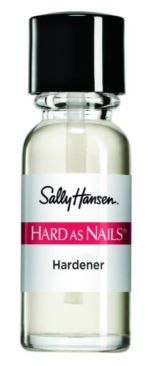
Hard as Nails is less than $3.50; the super-glue fly-tyer version comes with a finer pin-like applicator.
UV resin isn’t solvent-based. It doesn’t shrink during curing and is meant to build a surface layer that dramatically improves the fly’s appearance and adds to its overall thread-wrap security.
Resin Performance
UV resins harden with direct sunlight or UV light, creating a glossy finish shaped by the fly tier. They cover the thread effectively but don’t penetrate as deeply as head cement.
NOTE:
The top, more expensive brands have made significant progress in UV light curing reliability. But applying that science at your home fly tying bench can still feel like brushing your teeth in the dark with a stranger’s toothbrush — functional, but far from perfect.
Sally Hansen Products
Products like Sally Hansen Hard as Nails, Fly-Tite, Top Coat, and several others are budget-friendly options for fly tying. They act as thin solvent-based cements or nail-polish-style finishes rather than true cured resin systems.
NOTE 2: With solvent-based head cements, let them cure at least overnight so the solvent vapor doesn’t get trapped in your fly box. Tube flies are generally safer from the vapor issue because they are usually not stored in a closed fly box and do not need to be. Another benefit with tube flies is that hooks are applied at the water and replaced as needed — a life-extending feature that can keep a single ‘killer’ fly serviceable for a season or more.
FEATURED Image: Frederic M. Halford, 19th-century English fly tyer. Mike Cline – Extracted from Public Domain PDF version of The Dry Fly Fisherman’s Entomology-Mosely (1921)
Watch Peter Charles’ video on resins and solvent-based cements here . . .
Sponsored