

Poly Leaders, Alberto Knot. What are you talking about? I am here to kill as many trout as possible. Commons image 1930: Fish stories alleged and experienced: with a little history, natural and unnatural / by Charles Frederick Holder and David Starr Jordan.
The angler has several obligations regarding knots

Henry Clement, Rehoboth Beach, Delaware, August 2023.
By Henry Clement
At an impromptu gathering at our benefactor’s home, six of us enjoyed French madeleines, café espresso, and a touch of civil discourse.
Our plan for fly tying was to create a riffle hitch tube fly
The riffle hitch tube fly was invented to entice Atlantic salmon (Salmo salar) into taking a fly that bounces across the surface while disturbing a riffling current. Although its origins lie in Scandinavia, the specific individual credited with its invention remains unknown. This fly, designed to create disturbances, has proven effective at attracting a variety of game fish in both saltwater and freshwater.
During our coffee, a discussion
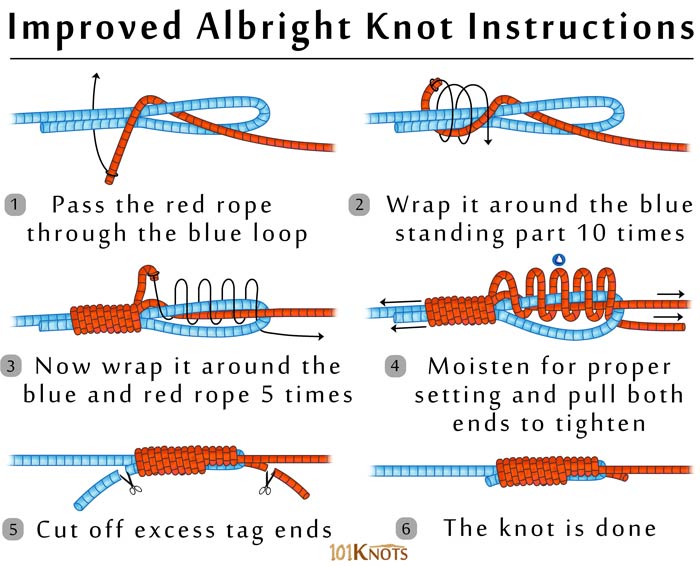
I defended the Albright Knot, arguing that it is nearly a 100% knot, simple to tie, and its inline design minimizes potential harm to the knot while passing through the guides, especially the tip-top guide.
The challenge arose with the assertion that the Albright is not nearly a 100% knot; in reality, it is closer to a 78% knot. I conceded this point but added that incorporating overhead knots locks the fly in place and significantly enhances its effectiveness and strength. A quick search came up with a YouTube video showing instructions and confirmation that an eight-turn Albright Knot achieves a 100% strength when the five overhead knots are added. The breaking strength of a 20-pound test mono Albright Knot fails in the line, not the knot, at 23 pounds tied to braid.
Another point of contention was the Alberto Knot, essentially an Albright Knot, but it involves eight to ten turns winding away from the initial loop, followed by the same number of turns re-wrapping toward the loop. This method is stronger than the Albright Knot; however, additional concerns are associated with it. Reality for one.
A dose of reality goes a long way
The Alberto may be more robust than the Albright, but it is challenging to tie outside a relaxed setting. Wrapping away from the loop can be more difficult than one might expect, especially with small-diameter lines and limp lines being wrapped back over those initial turns towards the loop. It adds further complexity, and that invites error, potentially leading to coil-over wraps and seating issues that weaken the knot.
Ultimately, I suggested that no one wants to deal with difficult, error-prone knots, which led to unanimous agreement in my local fishing community to avoid the Alberto Knot.
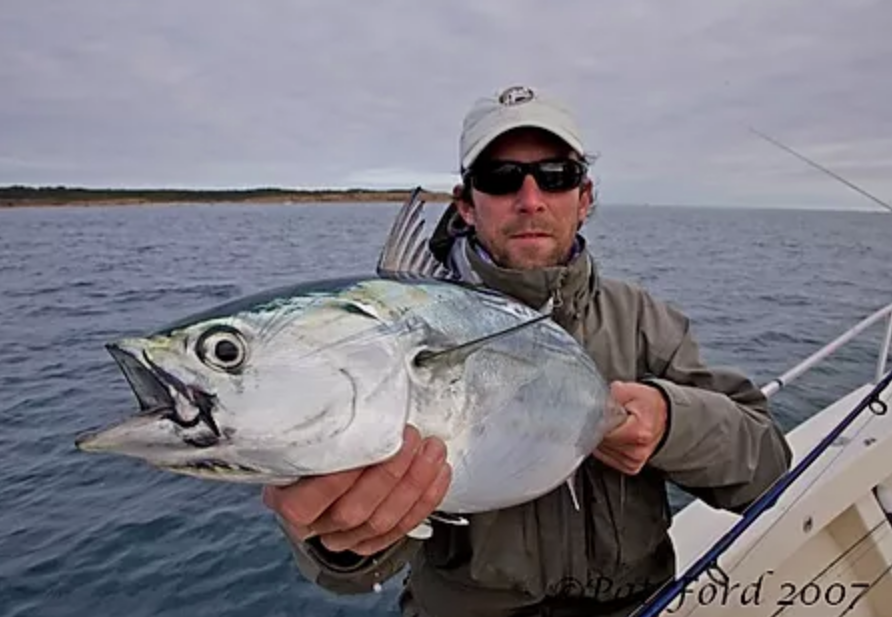
Capt. Andrew Derr with a nice albie off the coast of Montauk 2007. Photo Pat Ford.
Decisions should be made by those with accumulated experience
The primary responsibility of an angler is to choose the right knot for the task at hand. For example, while a double surgeon’s knot can be useful in some situations, it is not suitable for securing the fly line to the leader butt. This is because the double surgeon’s knot is too bulky to pass smoothly through the tip-top of a fly rod, which could cause unnecessary wear on both the knot and the rod’s tip-top. Additionally, it can snag in aquatic debris and does not offer the strength of the Nail Knot. The Nail Knot is the most commonly used knot for joining the fly line and leader butt after cutting off the manufacturer’s loop, a practice that is highly recommended. This is because a manufactured fly line loop can compromise the energy transfer from the fly line to the butt section, which is a well-established fact.
The after-effect of bleeding off energy
If you’re wondering why your good casts keep collapsing, it may be because the loops (from the fly line to the leader butt) are draining the energy you’ve generated in the fly line. Sometimes, a loop is unavoidable, especially with poly leaders. They are too thick at the beginning of the taper, making it risky to use a Nail Knot, as that could undo all the benefits you’ve gained. Additionally, having a loop connection makes it easier to switch between different poly leaders or to go back to using no poly leader at all. The energy loss caused by introducing a poly leader into the leader configuration is generally manageable and can be compensated for with an efficient fly casting.
Note: Flip Pallot and Brian Flechsig recommend pre-tying leaders with poly leaders to save time.
UPDATE:
Capt Andrew Derr reports: “Albies are in. 2025 has already been an excellent year for stripers and blues. Book now for your fall shot at albies and stripers.”
Call 212-495-9062 / Website: click here . . .
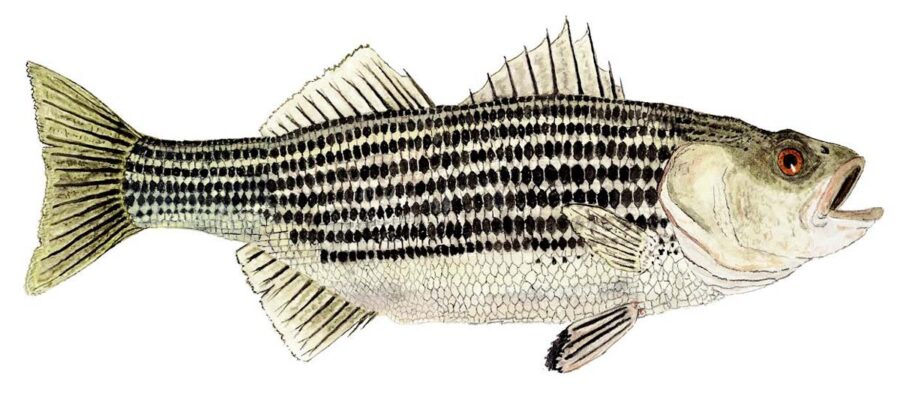
Thom Glace, the award winning watercolorist’s commissioned striper is one of the best illustrations of Morone saxatilis.
Sponsored