
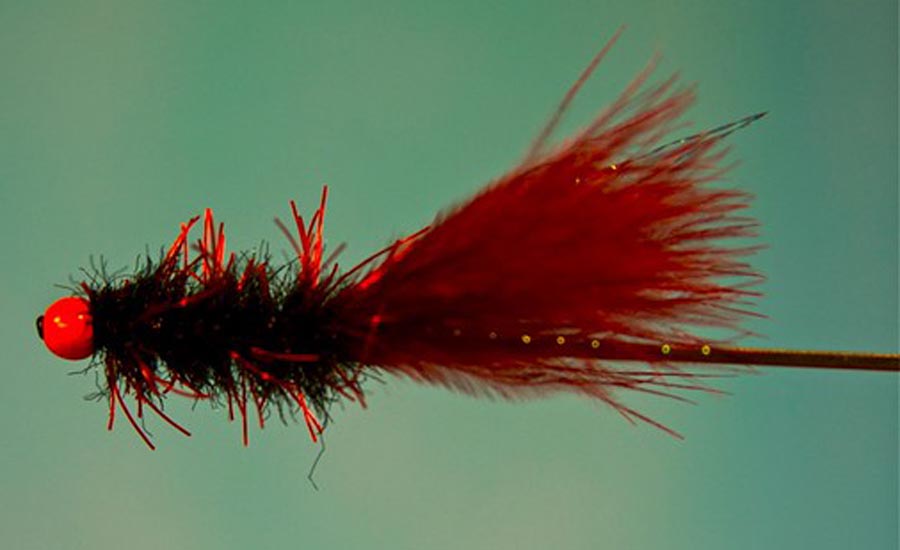

Russell Blessing holding a Wooly Bugger. Photo by Fly Rod + Reel.
Since I met Russell Blessing in the late 1960s, I’ve caught countless fresh and saltwater fish with his Woolly Bugger

Henry Clement, Rehoboth Beach, Delaware, August 2023.
By Henry Clement
The fish have ranged from tarpon to crappie, trout to bonefish, and largemouth bass to redfish. My success on several continents encouraged me to permanently switch to tube flies.
Over 12 years, using tube flies—especially the “bugger” fly and its various iterations of the fly—has proven to be a deadly imitation of emerging aquatic creatures, baitfish, or threats to salmon spawning. That’s solidified my penchant for these flies.
I never thought they would work until they did
One of the strangest catches was a roosterfish in Panama. The rooster is easily identifiable due to its large, comb-like dorsal fin. While it’s not suitable for eating, I believe it’s more fun than most game fish because of its raw power, impressive size, pan-shaped body, and majestic aerial displays. Getting almost any game fish to the gunwales causes a frenzy. However, landing a roosterfish, especially if it’s in the 40-pound category, is a miracle; anything heavier seems unthinkable. Just touching the leader counts as a catch, and roosterfish can weigh over 100-pounds in the warm coastal regions of the Eastern Pacific.
Other fish that eagerly chase after the bushy-tailed version of the bugger include northern pike, snook, and largemouth bass. It’s worth noting that while many other fly combinations are more commonly used, if everything fails, I’ll revert to a bugger. It’s always a surprise when it gets eaten, and watching the fly ride up the leader like a thief in the night is always a thrill.
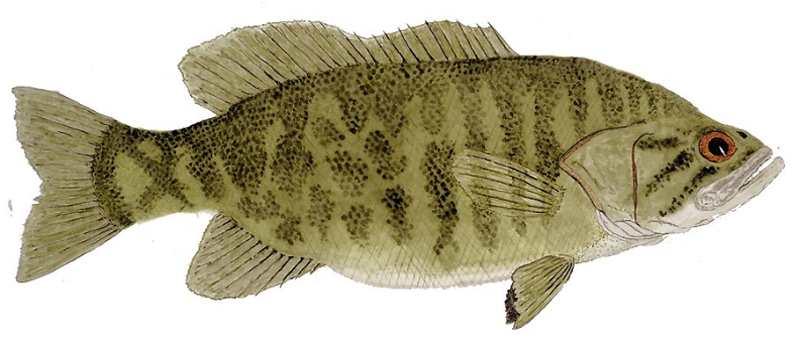
Harrisburg, Pennsylvania’s Russell Blessing’s target for his new fly, Woolly Bugger, was the smallmouth bass, but it turned out to be virus-like and attracted just about everything. Thom Glace, a neighbor of Blessing’s but from a different time [Mechanicsburg, PA], is the famous watercolorist and award-winning artist who provided the smallmouth bass and other illustrations for this story.
Not too many flies are easier or cheaper to tie than a tube version of Russell Blessing’s Woolly Bugger
The difference that may have elevated the catch statistics for trout and saltwater flats fish is likely due to my exclusive use of tube flies, particularly buggers. After tying hundreds of bugger and bugger-inspired tube flies, I believe nothing is easier or cheaper to tie than a tube version of Russell Blessing’s Woolly Bugger.
Why? The bugger is considered an excellent training fly for novice tiers. It’s forgiving if they crowd the hook eye, over-thicken an abdomen or thorax, misproportion elements, or elongate the tail. It just doesn’t seem to matter much. However, if the weighting of the fly creates an imbalance and it rotates during a retrieve, you’re likely out of luck when it comes to getting bites.
Get a tube fly bugger wet and swim it erratically, and good things can happen if fish are around. Of course, you may need to modify your retrieve, ensuring that the bugger isn’t perceived as a threat. Many have seen their fly or lure alarm a 100-pound tarpon, causing it to explode in a panicked escape.
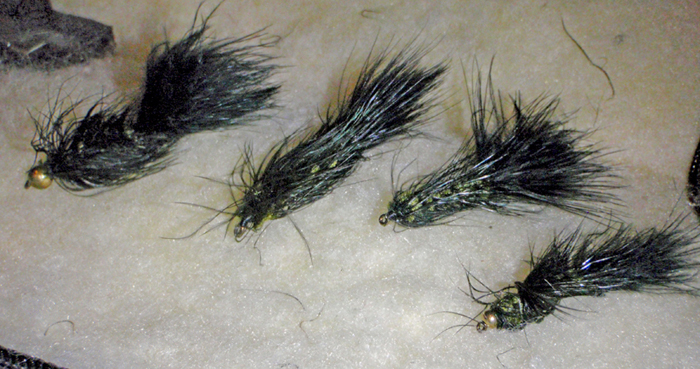
These were tied by Russell Blessing, inventor of the Woolly Bugger, and provided courtesy of Fred Blessing, his son.
Feeding the animals
In nature, if what you present as food deviates too much from what has been normal for land animals or game fish over millennia, it becomes a perceived threat. To enhance your bugger, consider using videos from Tim Flagler, Ruben Martin, or Matt O’Neal as guides for creating tube flies. There’s little difference between a tube-tied fly and a hook-tied fly; making an issue out of it seems unnecessary.
NOTE: The featured image showcases a fly tied with a tungsten bead head that enhances its jigging action. This fly can also be tied with standard brass, glass, or without any bead at all. This creation is an adaptation of Russell Blessing’s famous fly, the Woolly Bugger.
Here are your video choices: the list is random, and no video is better than another; just keep in mind that O’Neal has yet to demonstrate a tube fly, but his instructions on tying hook-tied flies are remarkable and enjoyable.
NOTE: Ruben Martin is added here because of his interest in TUBE flies. He has not tied the Bugger as a tube fly yet, but this Samastacus Crayfish fly is a good cousin of the Bugger. Also, an introduction to Ruben gives anyone interested in tying an opportunity to meet one of the world’s best.
Sponsored