

Flyfishing, etching by Winslow Homer, -1889. Source Library of Congress Prints and Photographs Division. Winslow Homer (1836–1910). A commons image.
I confess I am a fly fisherman of little repute. Any good standing I may have had was lost many years ago

Henry Clement, Rehoboth Beach, Delaware, August 2023.
By Henry Clement
Starting an online magazine, flylifemagazine.com, was an attempt to give a new voice to my co-authored book, Fly Fishing the Florida Keys, which I wrote with my stepson, Captain Andrew Derr (see below).
The goal was to rally support against Big Sugar’s corruption and the South Florida Water Management District’s arrogance, both of which contribute to the pollution of the Florida Everglades. I aimed to fight for the preservation of Biscayne Bay, protest the Ocean Reef Club’s destruction of mangrove forests, and expose the overdevelopment of the Florida Keys and the decline of its coral reefs.
Unfortunately, the joy of flylifemagazine.com did not lead measurably to success in achieving any of my objectives, but I still found enjoyment in fly fishing using a barbless hook. My friends said it was my way of giving the fish a sporting chance, which they claimed increased the odds against my success.
The Land Captain
My mentor, Steve Kantner, known as the Land Captain, taught me how to fly fish in South Florida. He conducted thorough research and strongly opposed my netting, spearing, or dynamiting fish. Instead, Steve encouraged me to embrace the challenge—the test of wits between the game fish and myself.
Fly fishing introduces a greater margin of uncertainty, greatly enhancing the joy of landing a fish. Every saltwater angler who has experienced the thrill of a 20-pound snook rising to their fly—only to lose it in an aerial explosion—will forever remember the feeling of reeling in the elusive Centropomus undecimalis.

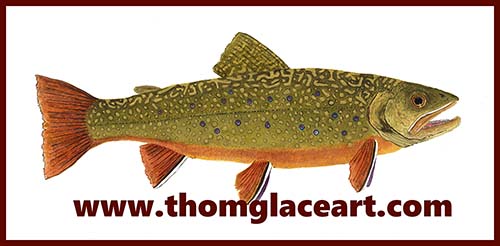
False albacore by award-winning watercolorist Thom Glace – here’s a link to his awesome gallery.
Artificial
Few experiences rival the satisfaction of landing a fish on a self-tied fly. A meticulously tied fly, which closely resembles an aquatic insect or baitfish, is generally attractive. However, a tube-tied Woolly Bugger, despite its creator Russell Blessing’s claim, does not resemble any creature that ever existed—yet it certainly proves effective.

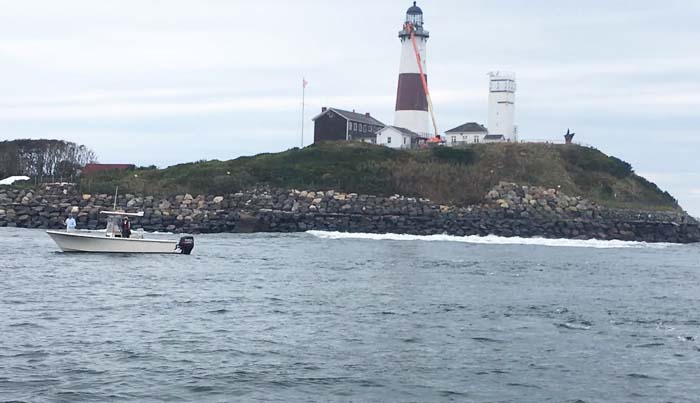
A happy client with a fly caught in Albie in Montauk, Long Island, New York, a day ago. Photo credit: Capt. Andrew Derr
Captain Andrew Derr is currently in Montauk, Long Island, New York, where he reports that Atlantic albies are aggressively attacking the baitfish and devouring his hand-tied flies. He has a few fishing dates available.
Feeling the itch? Satisfy it here. . .
Note: Steve Kantner has retired from guiding, but his unmatched talent for documenting the events that shaped South Florida angling endures. His latest book is nearly sold out. Here’s the information you need to order a copy of End of the Line 2.0:
CONTACT: landcaptain@comcast.net
NOTE: Steve self-published this book, so you can contact the legend by emailing him.
Sponsored