

An 1891 map showing mining claims in the Red Mountain district. The Barry Lawrence Ruderman Map Collection/Stanford University Libraries
The administration and Congress divert funds away from conservation

Jonathan Thompson was born and raised in southwestern Colorado. He owned and edited the Silverton Standard & the Miner newspaper in the tiny town of Silverton, Colorado, and was the editor-in-chief of High Country News from 2007 to 2010. He is the editor of The Land Desk, the author of two non-fiction books, River of Lost Souls and Sagebrush Empire, and one novel, Behind the Slickrock Curtain. He currently lives in Greece with his wife, Wendy.
By Jonathan Thompson, August 28, 2025
NOTE: The original story has been abridged
In the late 19th century, many prospectors moved to the Red Mountain Mining District in southwestern Colorado. They staked hundreds of 10-acre claims along streambeds, on aspen-covered slopes, and anywhere else they thought might have gold or silver. After five years, they could claim land ownership under federal mining laws.
Today
The visible signs of that mining boom include a few abandoned houses and mine structures, a faint railroad line, and piles of orange waste rock. However, maps show another story. Thousands of acres of private land comprised of long, thin mining claims spread across U.S. Forest Service and Bureau of Land Management land. Developers could turn these properties into vacation cabins, luxury homes, or small resorts. This could harm wildlife, spoil views along the “Million Dollar Highway,” and block access to public lands.
Volunteers
In response, volunteers from Ouray and Silverton worked with historic preservationists, local and federal land managers, and the Trust for Public Land. They bought over 10,000 acres to return to public ownership. After nearly a decade, by 2007, they had acquired about 9,000 acres for $14 million from the Federal Land and Water Conservation Fund (LWCF). This project was just one of many made possible by the LWCF over the past sixty years.
However, the Trump administration plans to take hundreds of millions of dollars from LWCF land purchases and instead use it for routine maintenance of national parks and federal lands. The administration aims to use money for long-term conservation projects to mitigate the effects of budget cuts at the National Park Service and other agencies. This tactic fits into a broader Republican strategy to defund and potentially eliminate public lands.
Support conservation and recreation
Congress established the LWCF in 1964 to support conservation and recreation. The fund uses money from offshore oil and gas drilling to buy private land near national parks, wilderness areas, and forests, and makes it part of the public domain. The LWCF was meant to fill gaps left by earlier land policies.
LWCF
In its early years, the LWCF enjoyed strong support from both political parties. In 1981, James Watt, who later served as Interior Secretary under Reagan, called it one of America’s best conservation programs. Yet, Congress and presidents have often provided far less than the original annual allocation of $900 million, resulting in a shortfall of about $22 billion since the program began. Still, it has bought over 8.5 million acres now open to the public and built recreation facilities in nearly every U.S. county.
Last year, the fund contributed $62.4 million to buy the 640-acre Kelly parcel in northwestern Wyoming. This expanded Grand Teton National Park and preserved a critical wildlife corridor. This purchase received bipartisan support, showing that people from different political backgrounds can agree on conservation efforts.
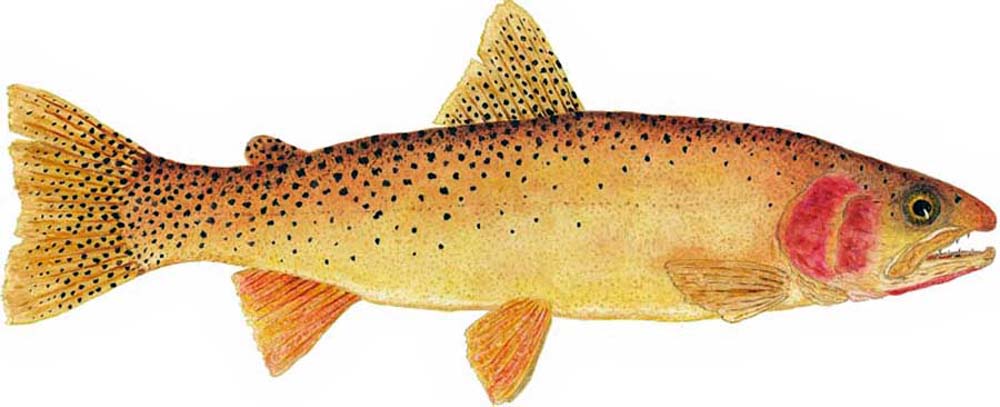
Yellowstone Cutthroat Trout by Thom Glace.
Most LWCF-funded projects have the backing of local communities—people in the West value undeveloped public lands for economic, ecological, and recreational benefits. The supporters of the Red Mountain Project were not just environmentalists; many were also critical of federal oversight, especially concerning mining. However, they recognized the importance of preserving natural resources.
Donald Trump backsteps
Even Donald Trump showed support for the LWCF at one point. In 2020, Congress passed the Great American Outdoors Act, which permanently funded the LWCF at $900 million yearly. After seeing a photo of land the fund had saved in Black Canyon of the Gunnison National Park, Trump signed the bill into law.

The south rim of Black Canyon of the Gunnison National Park. Photo Luna Anna Archey
Unfortunately, Trump has forgotten this support, as he and his Interior Secretary, Doug Burgum, are now trying to undermine this significant conservation accomplishment. This reflects a pattern in Trump’s administration. While it has rolled back environmental protections and fast-tracked mining and drilling permits, it has quietly reduced funding for popular programs.
Instead of directly cutting national monuments, congressional Republicans are seeking to freeze funding for Grand Staircase-Escalante National Monument’s new management plan. This would revert agencies to an older plan tied to smaller monument boundaries established during Trump’s first term. Effectively shrinking the monument without public attention. Their proposed budget for 2026 also aims to eliminate funding for various land management and environmental protection.
Please help me, I need more
These funding cuts are designed to release money to offset tax cuts for corporations and wealthy individuals. Yet, this approach will deny essential resources to federal land management agencies, making it challenging for them to operate effectively. This may lead to calls for privatizing their functions or even selling public land, allowing unpopular initiatives to proceed with minimal backlash.
If Trump proceeds with diverting LWCF funds, many essential conservation projects could go unrealized. This also includes efforts to establish a conservation easement on 130,000 acres in northwestern Montana and acquire land near Tucson. And would link protected habitats between Saguaro National Park and a county preserve.
Sixty years ago, Republicans and Democrats created the LWCF to promote conservation and recreation. Since then, the program has gained public support across party lines. If Trump ignores this support and cuts LWCF funding without public input, he may face backlash from constituents who appreciate public lands. Western congressional representatives should remind Trump of the political consequences of his actions. For example, show him examples of the lands the fund has preserved. There are thousands of success stories to choose from.

Journey Through the Canyons of Grand Staircase Escalante National Monument – Photo by The National Wildlife Federation.

Welcome to the Landline, a monthly newsletter from High Country News about land, water, wildlife, climate, and conservation in the Western United States. Sign up to get it in your inbox.
Sponsored