

(Ocean Conservancy)
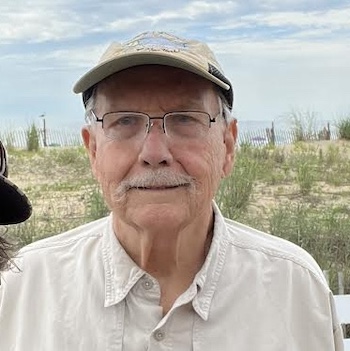
Henry Clement, Rehoboth Beach, Delaware, August 2023.
Publisher Henry Clement abridged and updated the original story by Hannah Hoag in 2017
The Arctic Ocean, historically the least accessible of major oceans, is undergoing rapid transformation due to climate change. Since 1979, its average summertime sea-ice volume has dropped by 75%, leading to nearly 4 million square miles of open water in September 2017.
A pair of Alaskan fishermen who thought otherwise chartered an airplane to fly over the donut hole and spotted close to 100 working vessels. At its height, fishing fleets from Japan, China, Poland, South Korea, and others were drawing more than a million tons of pollock from the waters annually. “It wasn’t illegal fishing because it was international waters,” says Benton, who is advising the U.S. delegation.
But it was unregulated
An international treaty was quickly negotiated, but it was too late. By the early 1990s, the pollock stock had collapsed. Twenty-five years later, it has still not recovered. Compared with the donut hole in the Bering Sea, which clocks in close to 50,000 square miles, the one in the Arctic Ocean is enormous.
The treaty, which replaced an earlier non-binding declaration, came into force in June 2021 and will run for an initial period of 16 years. This shift raises concerns about the impact on fish populations and the ecosystem. At the center of this change lies a 1.1 million square-mile area, known as the “donut hole,” which is unregulated and may be the last unexploited fishery on Earth.
Reykjavík, Iceland
Delegations from five Arctic coastal states and major fishing jurisdictions are meeting in Reykjavík, Iceland, to negotiate a deal that prevents commercial fishing in these international waters until fish stock assessments are complete. Ambassador David Balton, chairing the talks, aims to forge a compromise to avoid a scenario similar to the Bering Sea collapse of the 1990s, where unregulated fishing led to the depletion of pollock stocks.

Caption: The crew of the U.S. Coast Guard Cutter Healy on the Arctic Ocean (Reuters / NASA) MARCH 17, 2017
The Arctic high seas, currently free from commercial fishing, could attract interest, especially for species like Arctic cod, despite uncertainties surrounding their populations. More than 2,000 scientists have called for an international fisheries agreement to protect Arctic waters. By mid-2015, the U.S. and four other nations signed a non-binding agreement to restrict their fleets until adequate scientific data is available.
Thanks to Ambassador Balton, who functioned as the lead U.S. negotiator on a wide range of agreements in oceans and fisheries and chaired numerous international meetings. A legally binding agreement to restrict commercial fishing in the central Arctic Ocean is still in effect in 2025.

Hannah Hoag
Hannah Hoag is a journalist and editor based in Toronto. She works in the health, science, and climate units at the CBC. She previously worked at The Conversation Canada and Arctic Deeply, and co-wrote The Science Writers’ Handbook. Her work has also appeared in the New York Times, The Atlantic, Science, Nature, the Globe and Mail, and elsewhere.
 Ambassador David Balton functioned as the lead U.S. negotiator on a wide range of agreements in the field of oceans and fisheries and chaired numerous international meetings. During the U.S. Chairmanship of the Arctic Council (2015-2017), he served as Chair of the Senior Arctic Officials. His prior Arctic Council experience included co-chairing the Arctic Council Task Forces that produced the 2011 Agreement on Cooperation on Aeronautical and Maritime Search and Rescue in the Arctic and the 2013 Agreement on Cooperation on Marine Oil Pollution Preparedness and Response in the Arctic. He separately chaired negotiations that produced the Agreement to Prevent Unregulated High Seas Fisheries in the Central Arctic Ocean.
Sponsored